
urchin
pavilion
Oriel Plas Glyn-y-Weddw, Wales
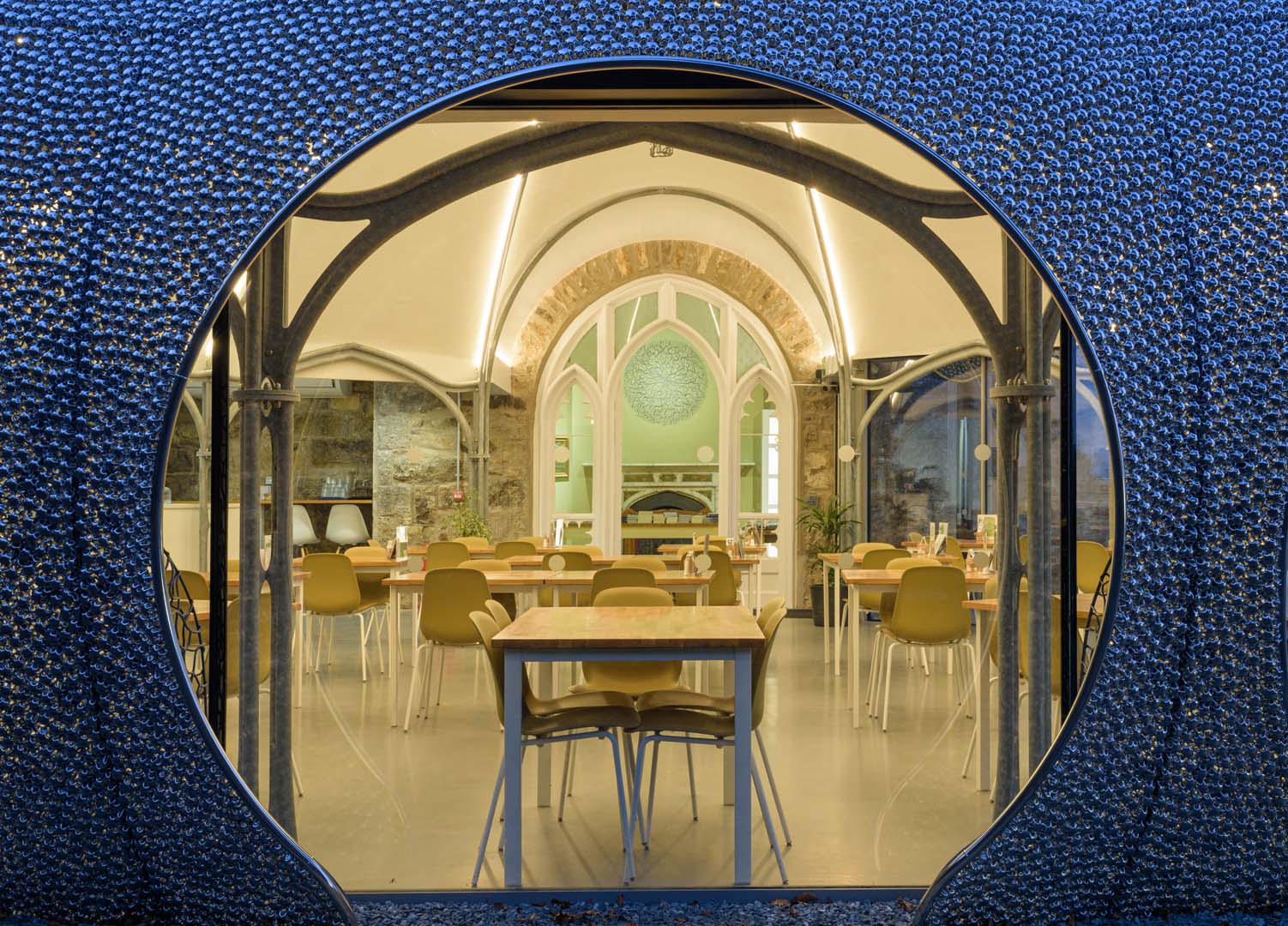
Oriel Plas Glyn-y-Weddw, an eminent arts centre in North Wales, operates under a charitable trust. Supported by locals and visitors alike for over 120 years, it plays a vital role in augmenting the economic and cultural vibrancy of the Llŷn Peninsula. Proudly standing as Wales’ oldest art gallery, this iconic Grade II* listed mansion was originally constructed in 1856–57 for Lady Elizabeth Love Jones-Parry. Designed by the Bangor-based architect Henry Kennedy, the mansion was built as a Dower House to showcase Lady Elizabeth’s extensive art collection.

Presently, the centre serves multiple purposes, not only as an art gallery featuring contemporary Welsh artists but also as a museum, performance venue, café, and event space. This multifaceted facility is a vibrant social enterprise and a valuable community asset.
The previous café, located in a 20th-century conservatory, had a fragmented kitchen setup spread across three areas. The aim of the café’s redesign was to create an eye-catching space that could increase seating and event capacity while integrating a single, efficient kitchen to enhance working conditions. Improving the catering facilities was expected to maximize economic potential, secure current roles, and open new employment opportunities.
After an initial design proposal did not meet the trustees’ expectations, they sought a creative solution akin to the artistic expressions displayed in the gallery. Metal sculptor Matthew Sanderson was invited to propose an alternative design.
Sanderson delved into societal influences and architectural styles from the period when the original mansion was constructed. This era of scientific intrigue and artistic inspiration, marked by contributions such as Charles Darwin’s “On the Origin of Species” (1859), guided his design. Ernst Haeckel’s marine biology and illustrations played a pivotal role in shaping Sanderson’s vision, particularly the sea creatures he depicted.


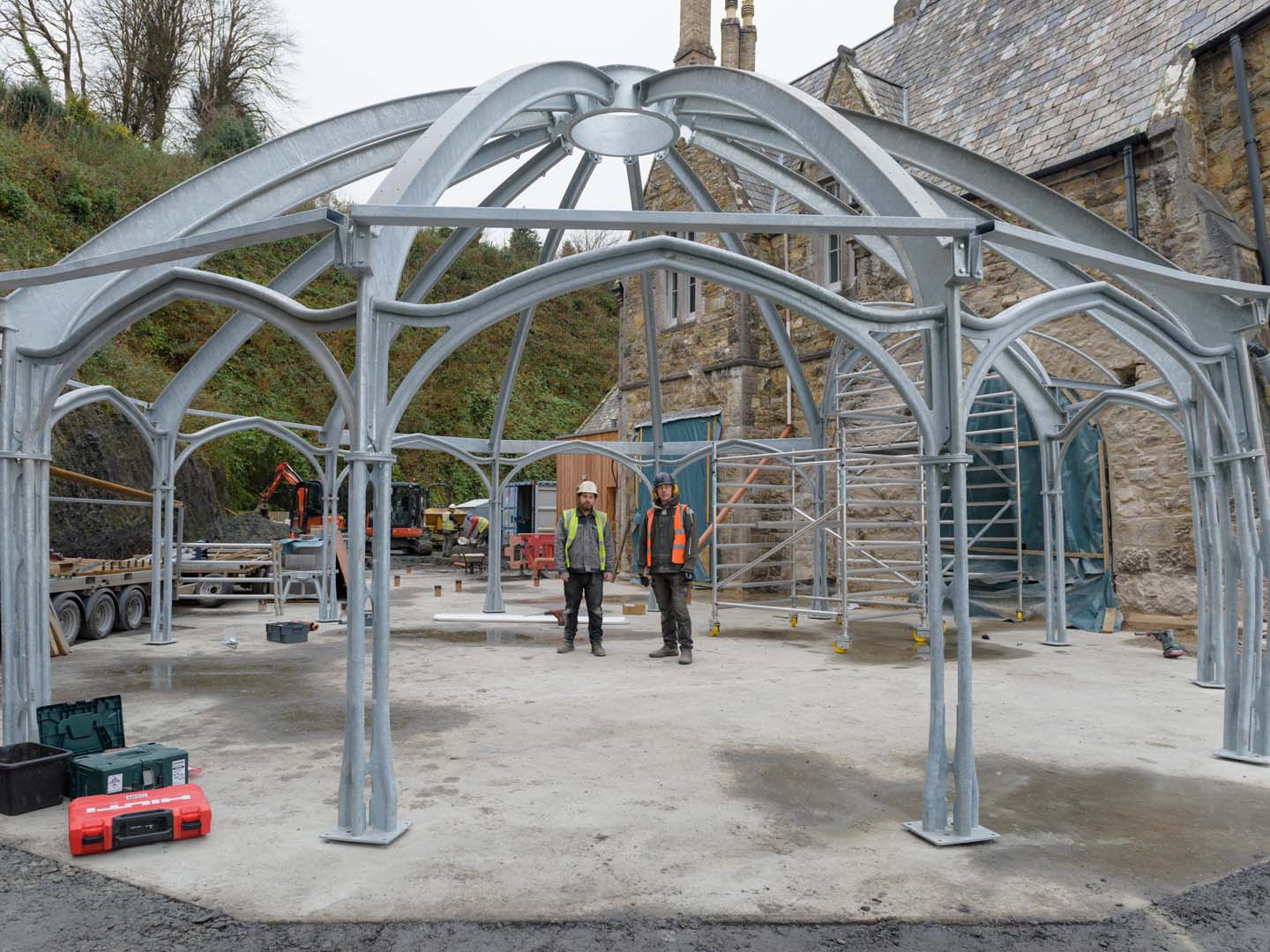
Sanderson’s café concept drew inspiration from both historical and current marine life at Llanbedrog Bay, a Special Area of Conservation brimming with unique species. The café’s design is inspired by sea urchins, resulting in an impressive eleven-metre-wide, self-supporting structure.
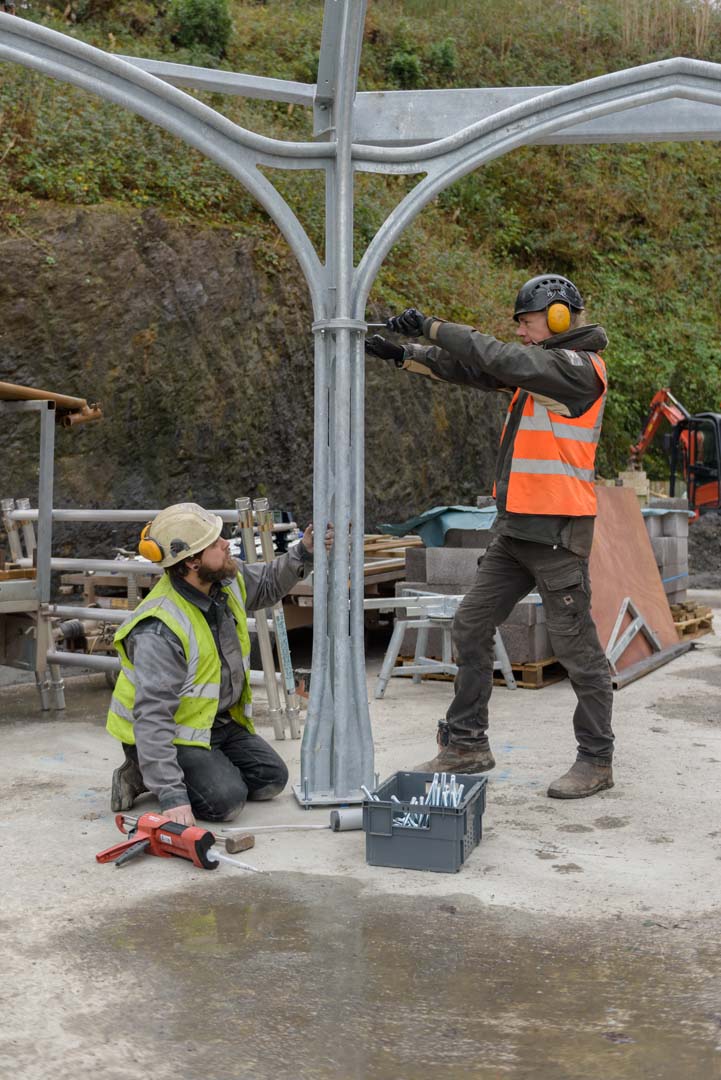
Received enthusiastically, the design evolved through collaboration among artist, engineer, and architect to meet operational needs. After securing successful listed building and planning applications, workshops cultivated a blend of ideas and technical constraints, enhancing the construction process.
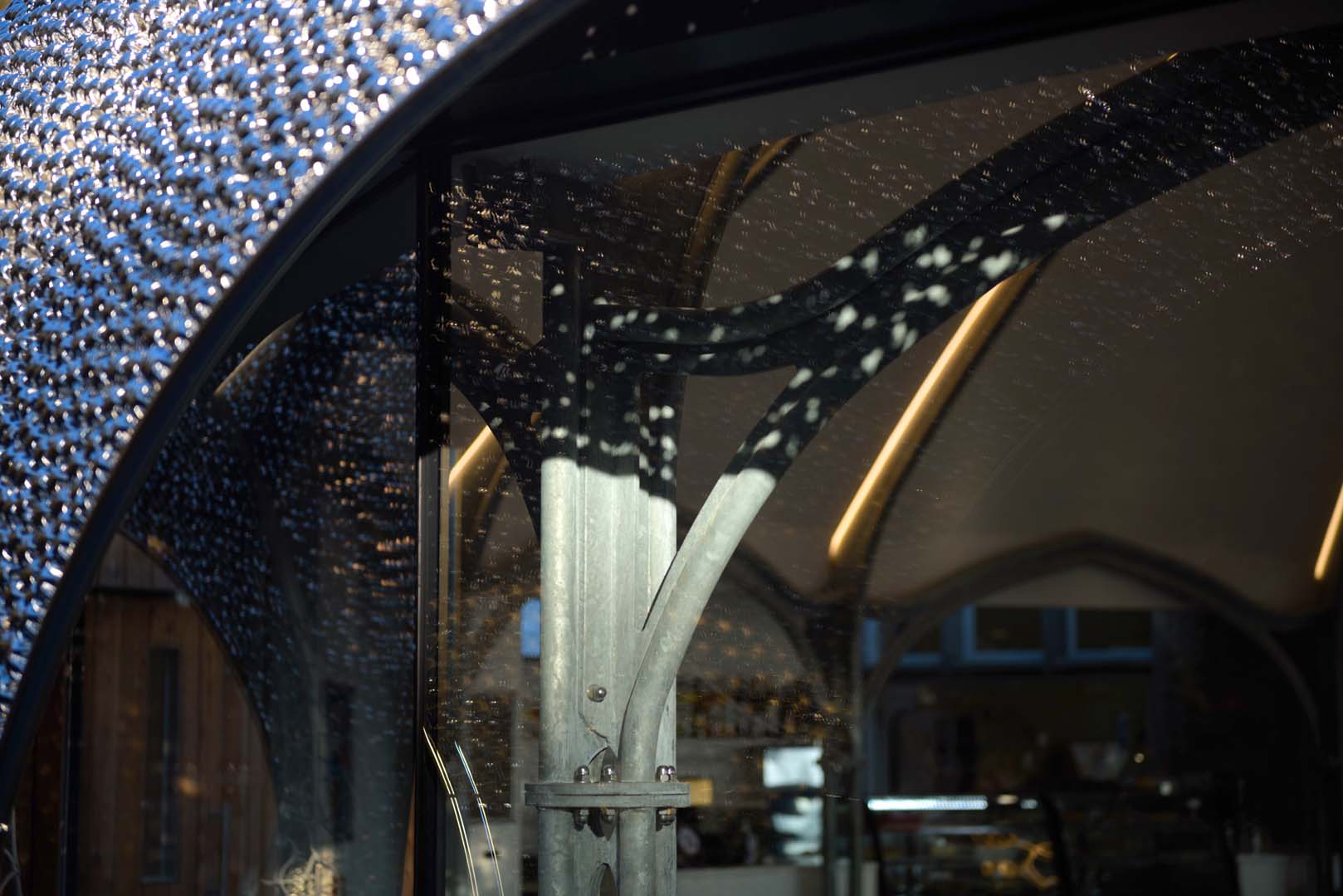
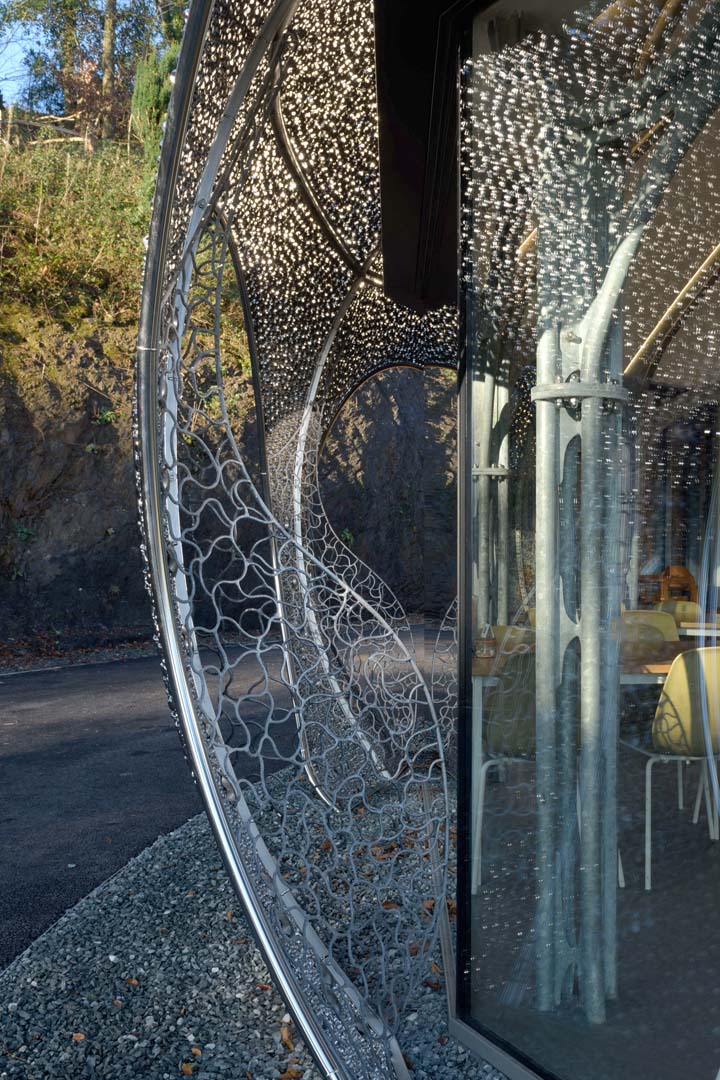
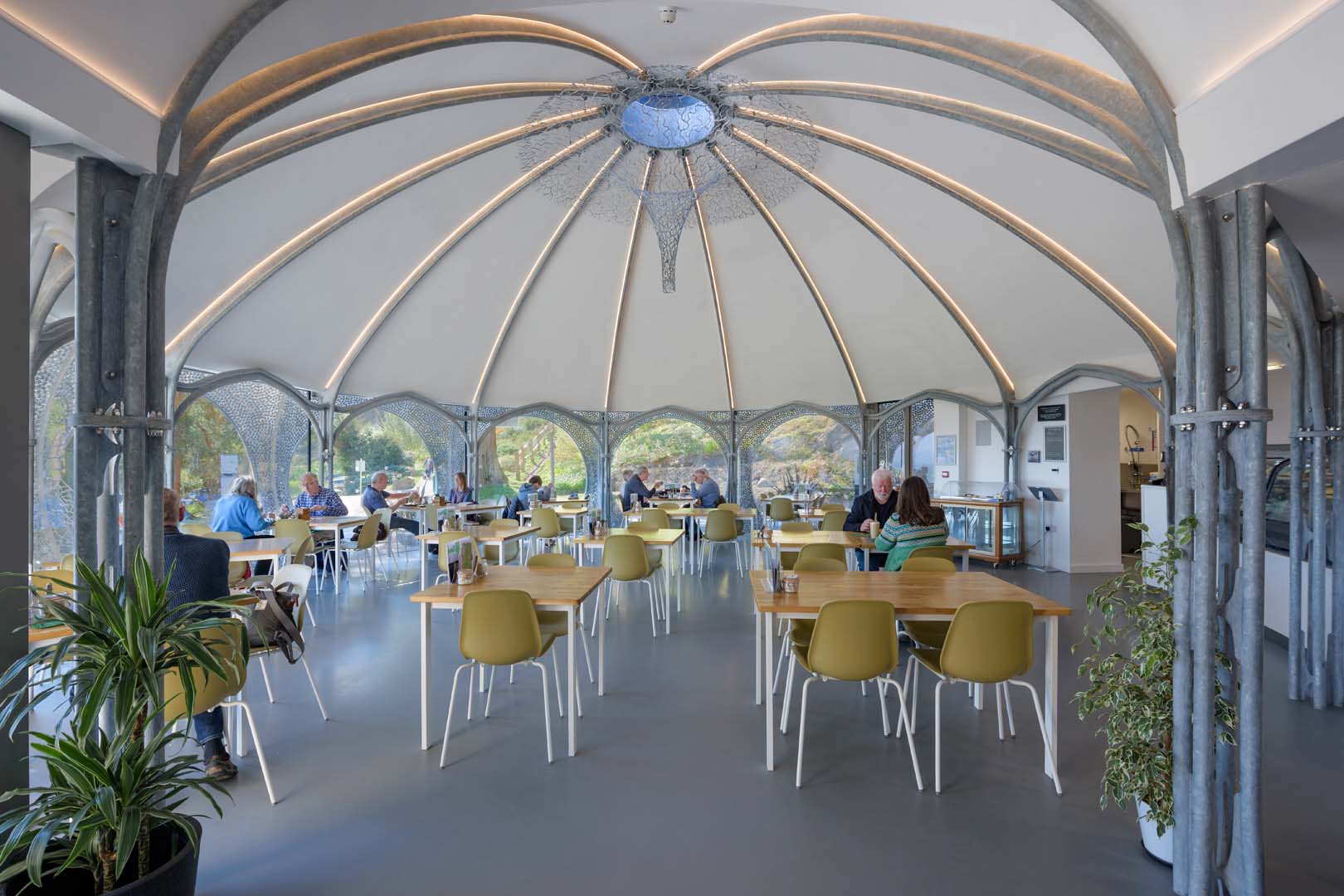
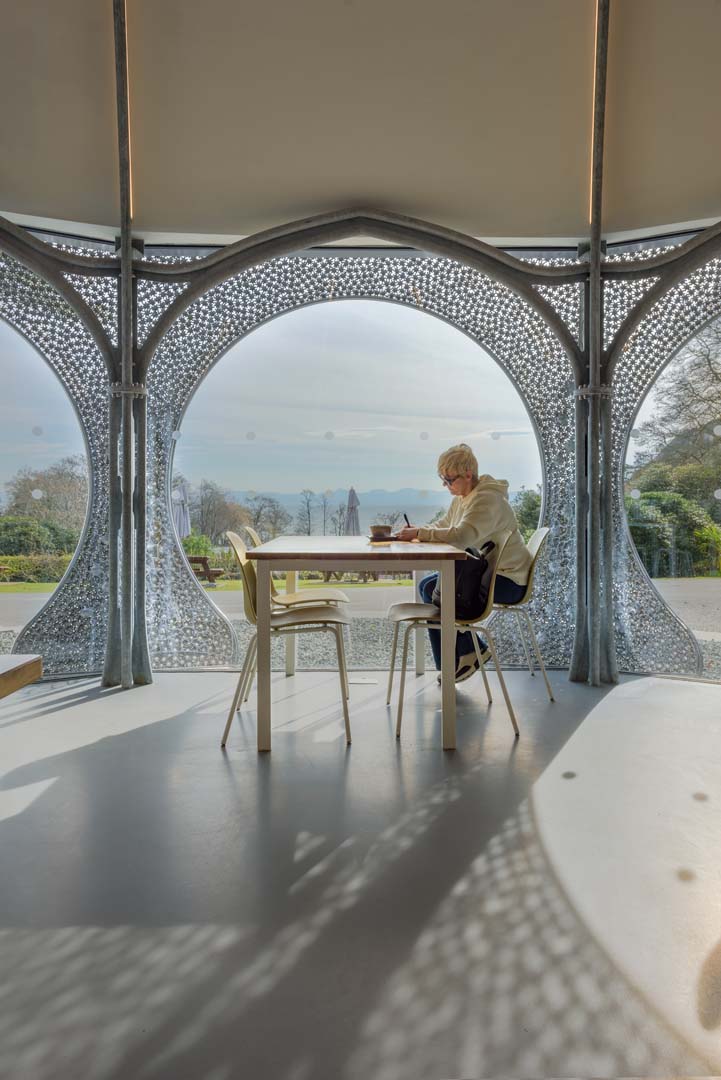
The design includes a ‘colony’ of 89,000 stainless steel acorn barnacle replicas. These handcrafted components scatter natural light to reduce solar heat gain inside. The urchin structure features a central oculus, channeling sunlight through a sculptural funnel, evoking Haeckel’s Radiolarian sea creatures. This light-filtering oculus also assists in passive ventilation.
The café’s thermal envelope, built from faceted structural insulated panels (SIPs), follows the roof’s curve and is lined with acoustic plaster. Frameless glazing provides panoramic coastal and woodland views, complementing the external ornate galvanized gills and structural frame.
In addition to the café, new restrooms were added to the historic mansion, accessible via a flexible, colonnaded pathway and includes new facilities and access points, followed by a larger café and kitchen construction.
The project, with a construction budget of £1 million, was made feasible through public funding from the Welsh Assembly’s Museums, Archives and Libraries Division, The Coastal Communities Fund, and Menter Mon. Private and trust sponsors included Lord and Lady Mervyn Davies, the late Paul Edwards, the John Andrews Charitable Trust, and anonymous benefactors.
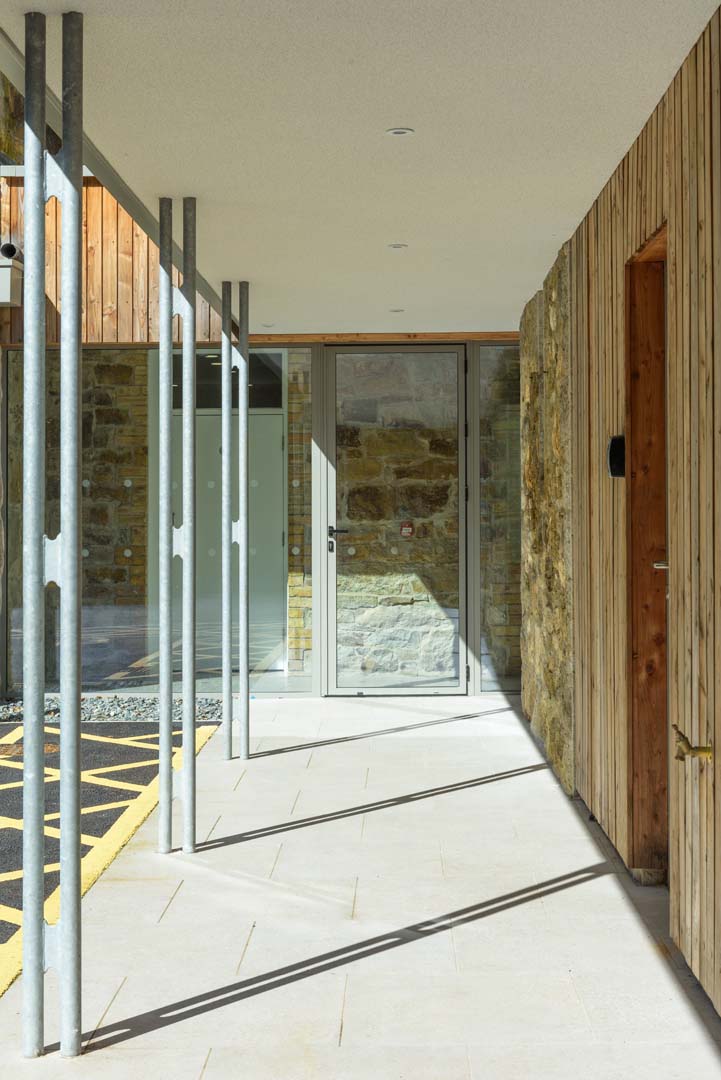
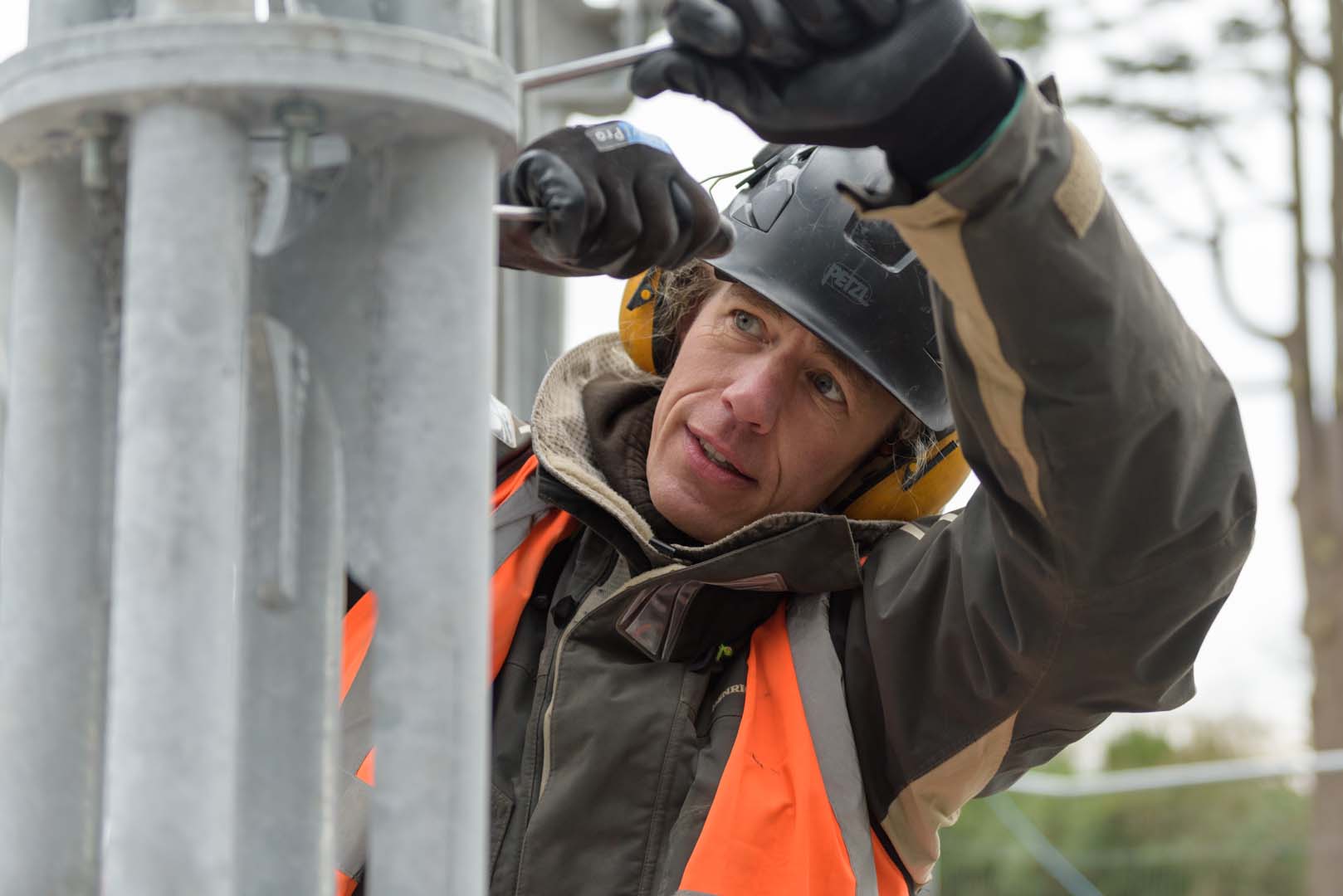
Renowned for his organic, mathematically inspired structures, Sanderson often chooses metals, such as varied steels, for his public works. With over 25 years of experience in steel construction and hot-dip galvanizing, his expertise ensures durability and aesthetic appeal. Collaborating with trusted galvanizing partners, Sanderson employs finishes that provide longevity and environmental sustainability, aligning with the café’s seamless integration of art and engineering. This approach not only protects the structure but also enhances its artistic and structural coherence.

Project Information
Architects: Mark Wray Architects
Engineers: Fold Consulting Engineers
Sculpture: Sanderson Sculptures
© Gareth Jenkins
- UK & Ireland
- Clevedon, England
- UK & Ireland
- UK & Ireland
- Bochum, Germany
- Putbus, Germany
- Inverkip, Scotland
- Rhineland, Germany
- Belfast, Northern Ireland
- London