
engineering
precision
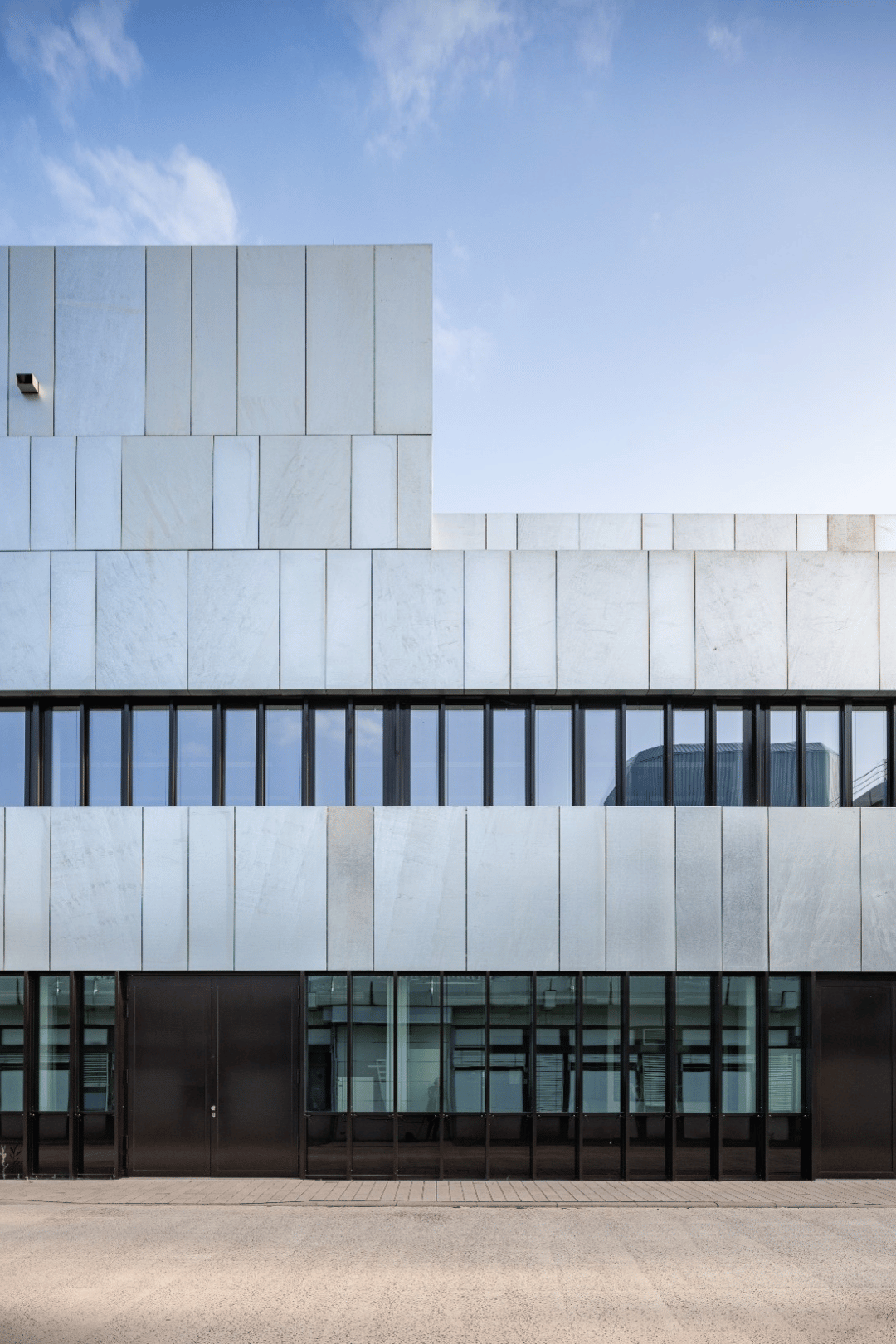
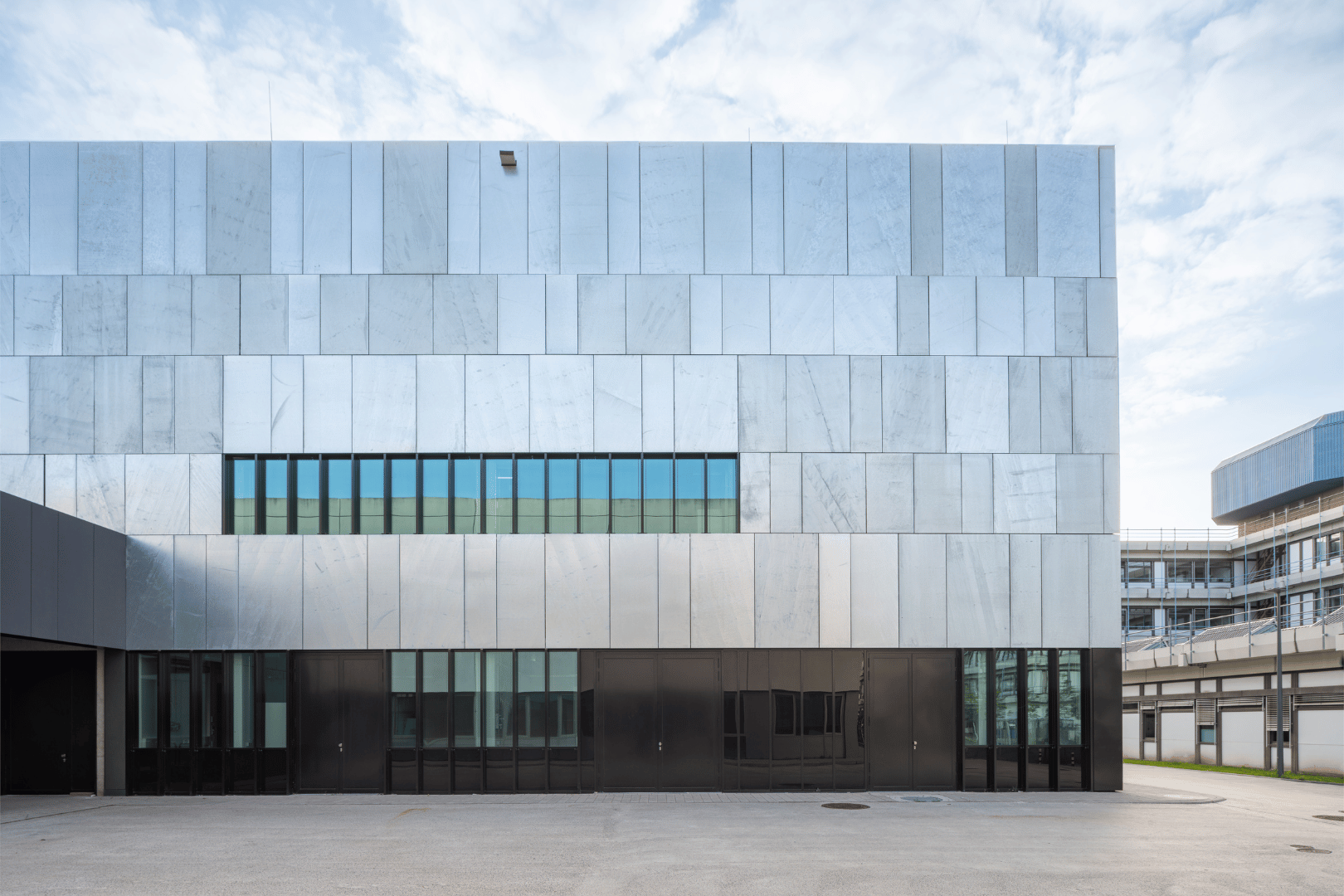
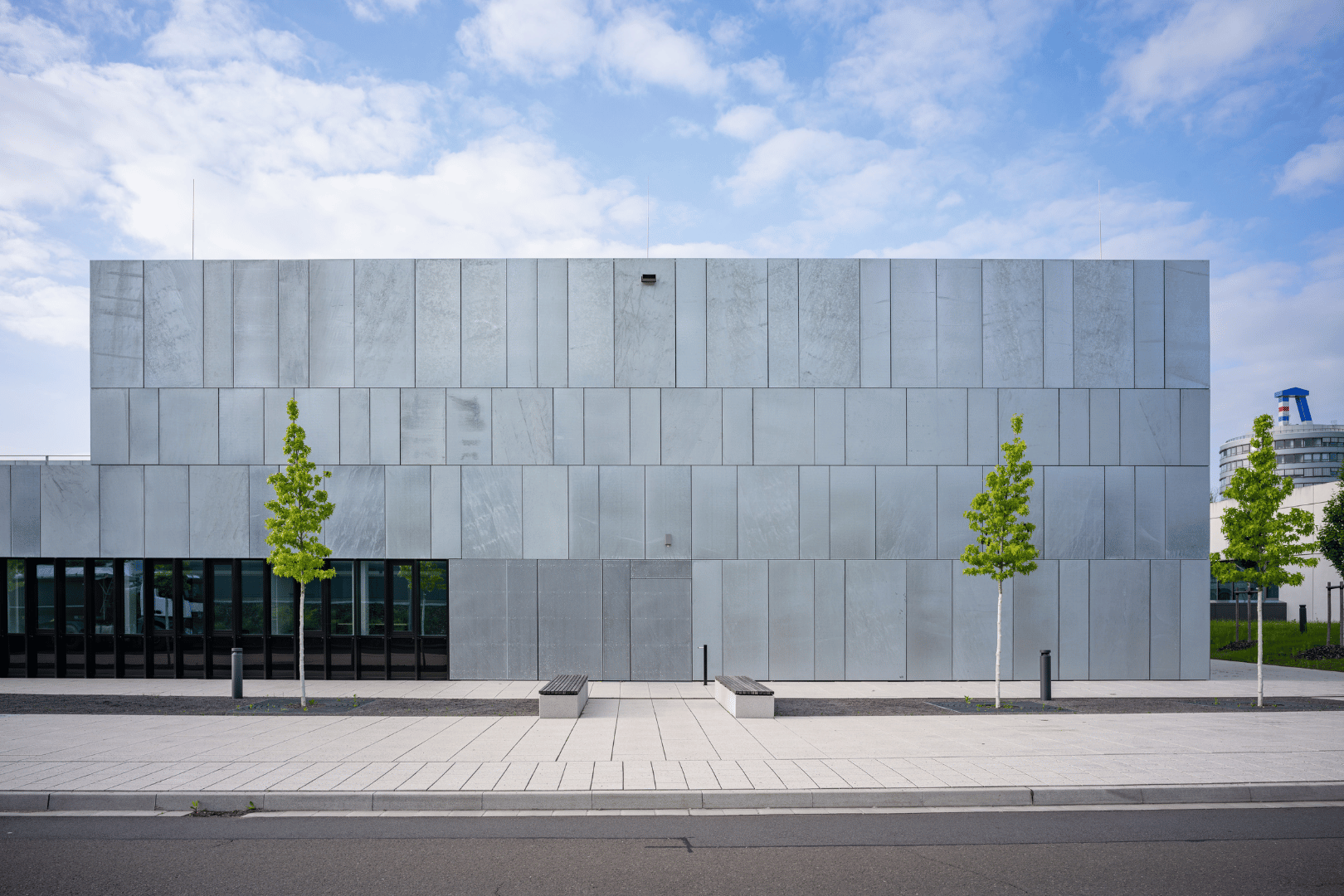
With the establishment of the new Laboratory for Precision Manufacturing and Microtechnology, Kaiserslautern University, a research facility has emerged that skilfully marries architectural clarity with technical sophistication. The façade, clad in hot dip galvanized steel plate, lends the building a measured, understated aesthetic that conveys both adaptability and resilience – qualities that also define the scientific endeavours housed within. This purposeful use of galvanized steel not only enhances the structure’s durability but also reflects the forward-thinking ethos of the institution itself.
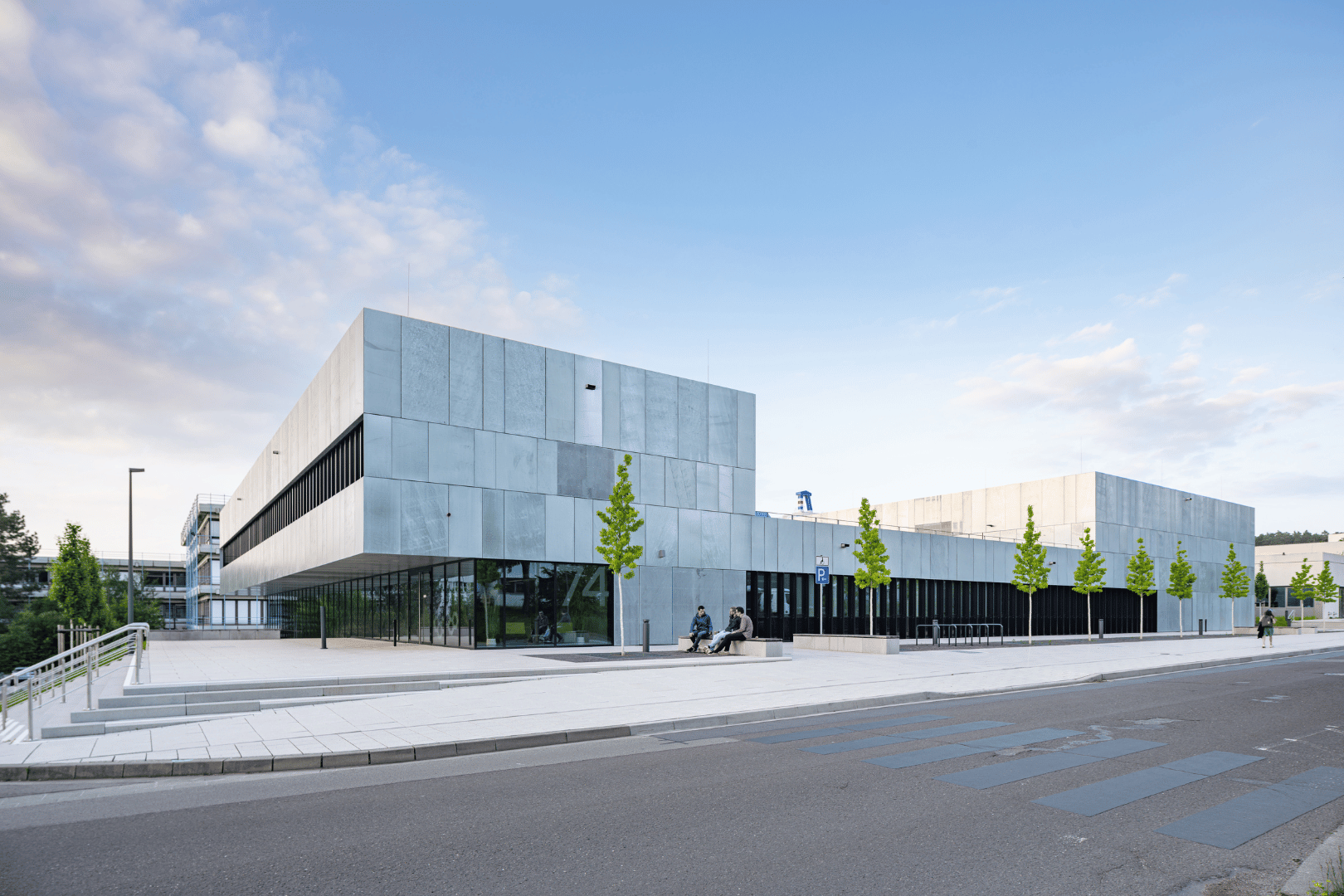
Situated on the campus of the University of Kaiserslautern, the newly constructed facility offers approximately 3,100 m² of space dedicated to interdisciplinary research. Here, mechanical engineering, physics, process engineering, and computer science collaborate under one roof in a forward-thinking environment designed to foster innovation across disciplines.
The architectural concept, developed by AV1 Architekten GmbH in partnership with asplan architekten, reflects a clear design ethos aligned with technical excellence. Commissioned by the state of Rhineland-Palatinate and represented by the state construction agency Landesbetrieb LBB, the building embodies the region’s commitment to cutting-edge scientific advancement.
At the heart of the new facility lies a commitment to ultra-precise, micrometre-level manufacturing. The laboratory supports the development of components for mobile devices, medical technology, optical systems, and vehicles with autonomous driving functions. It also provides purpose-designed environments for advancements in the semiconductor sector and fundamental physical research.
The technologies under development here are not only academically pioneering but also firmly rooted in real-world application and industrial progress. From everyday tools such as spectacles to diagnostic equipment, from sensors to process control systems – the outcomes of this research underpin a wide spectrum of innovation that touches many facets of modern life.
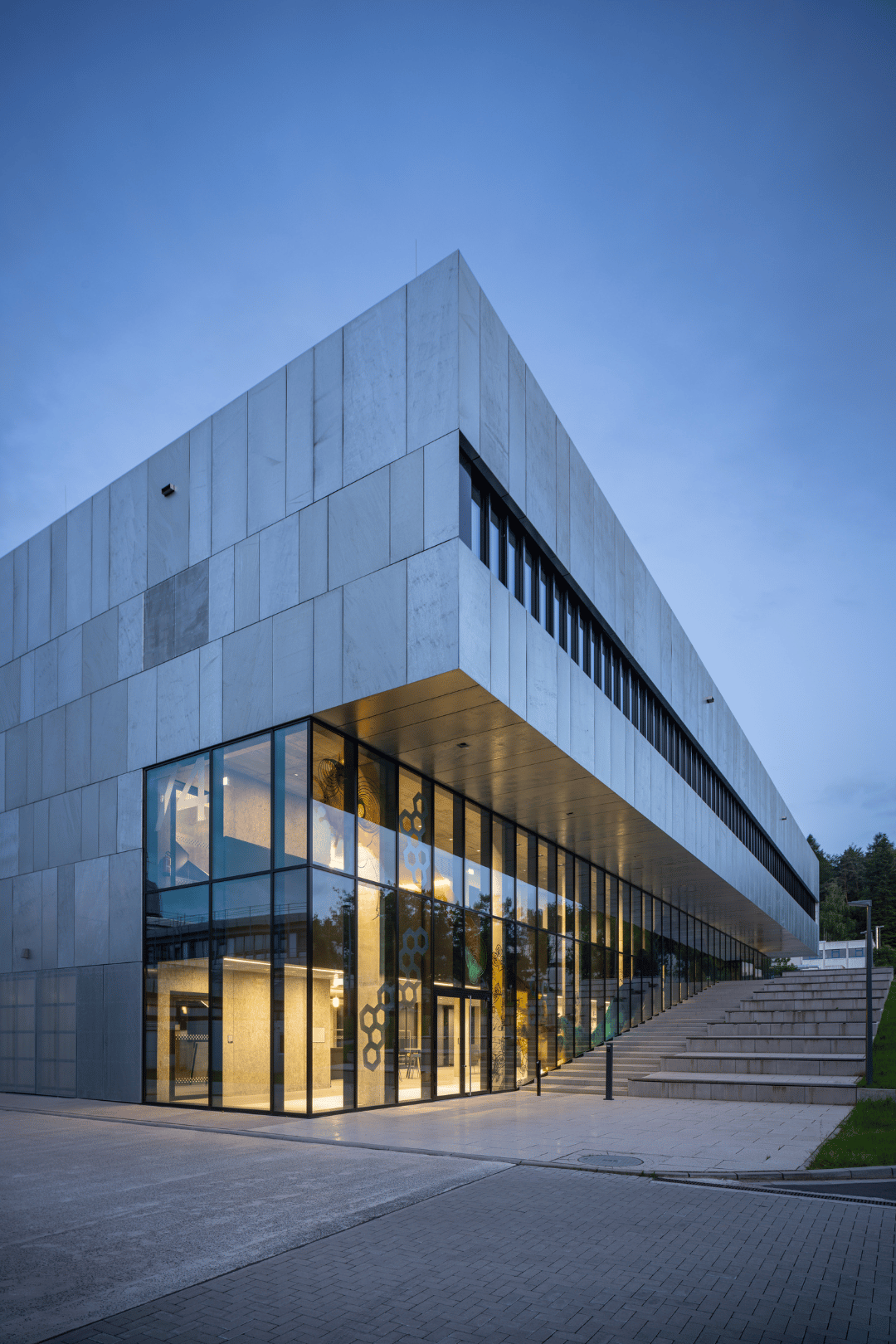
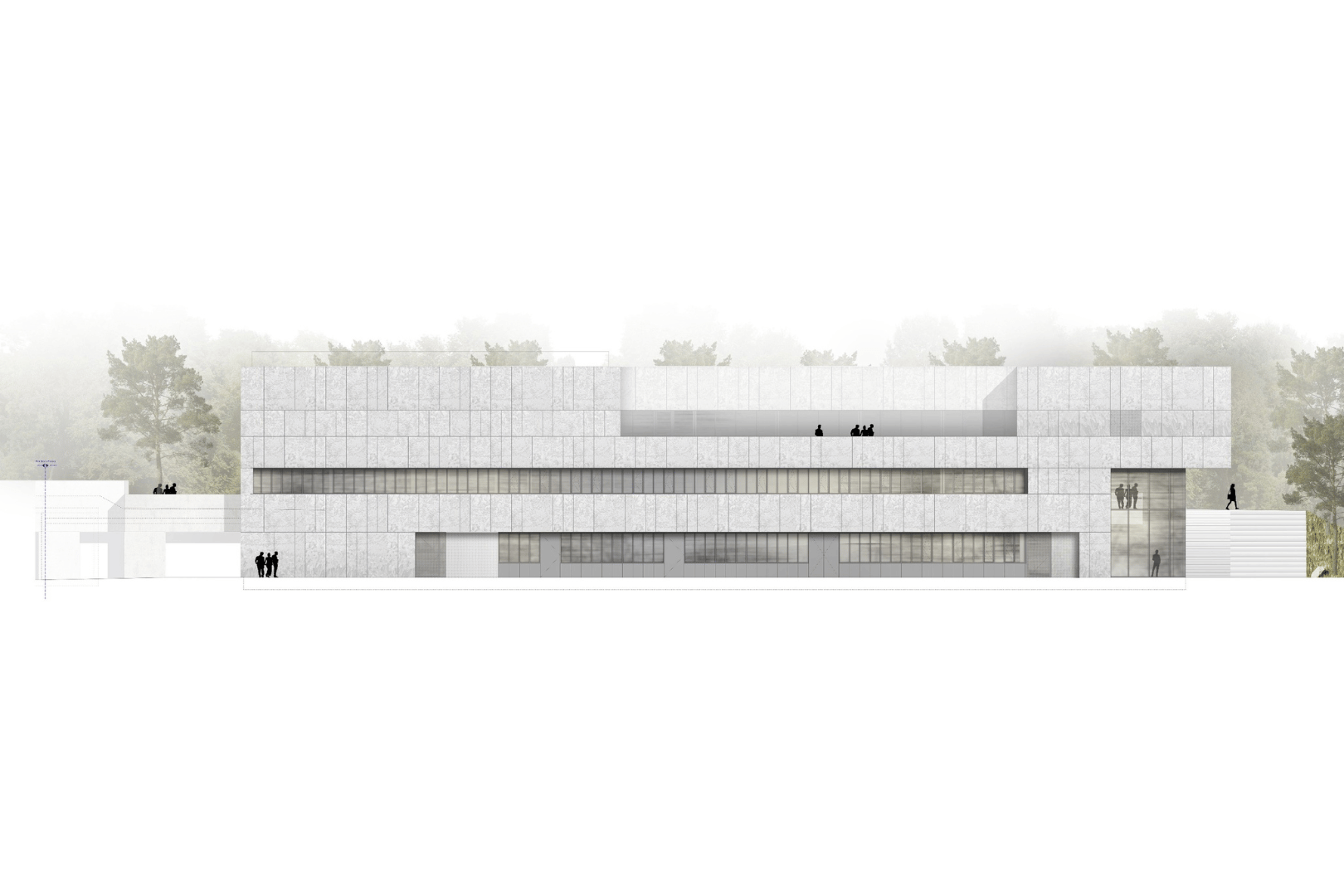
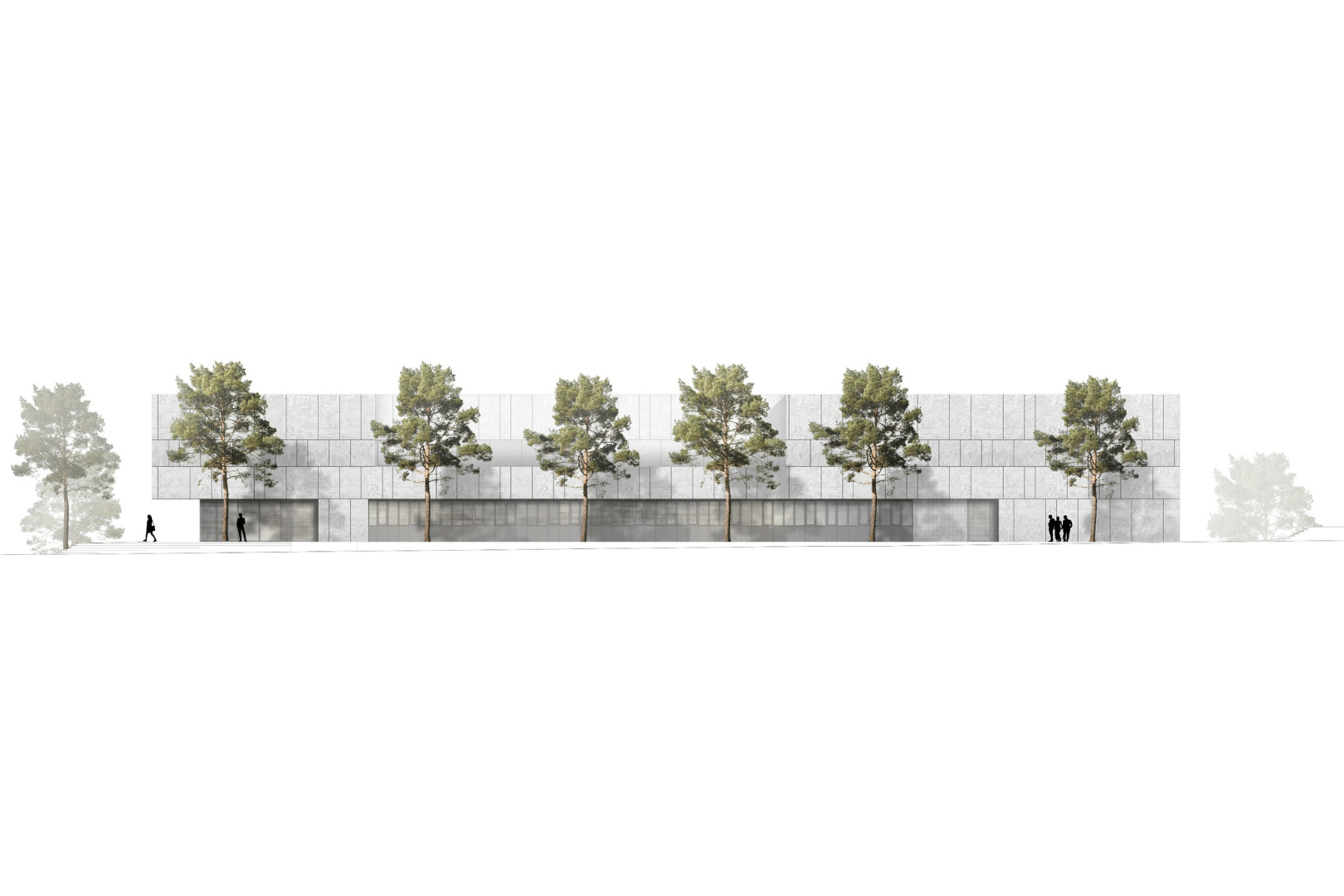
The building’s form is purposefully zoned to support efficient and uninterrupted research activity. A spacious, open hall forms the entrance, flanked by offices and seminar rooms that create a welcoming yet professional atmosphere. Beneath this level, laboratory spaces unfold – including cleanrooms designed for manufacturing, analysis, and precision measurement. Each area is logically connected, ensuring that workflows remain coherent and free from disruption, in line with the building’s exacting technical demands.
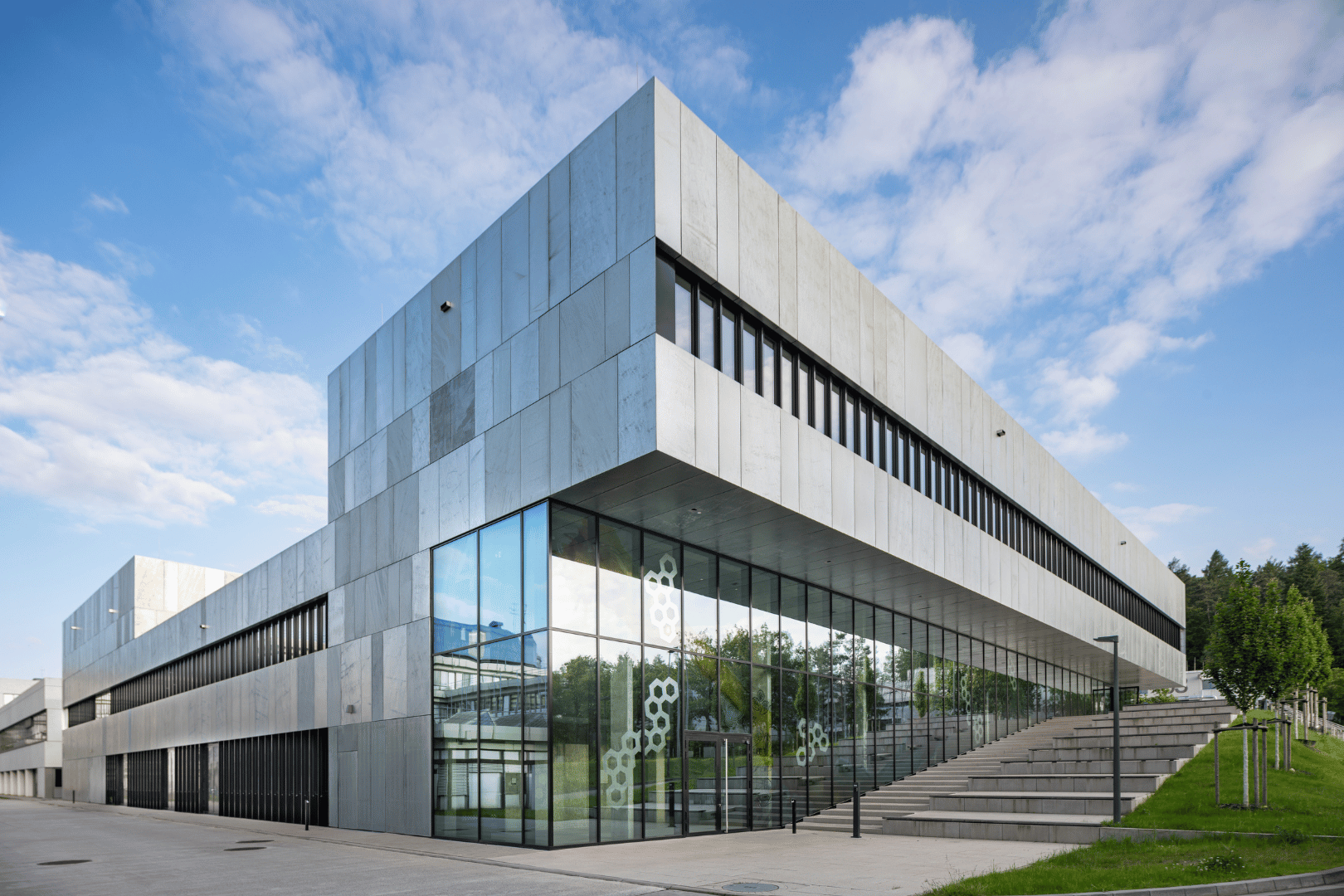
The façade of galvanized steel plate serves not merely as a protective envelope but as a deliberate architectural statement. Its calm yet dynamic surface responds subtly to changes in light and weather, embodying both technical reliability and architectural restraint. It is a façade that supports the building’s purpose rather than drawing attention to itself – a conscious choice in favour of durability, low maintenance, and timeless material integrity.
On the upper floor, the view extends across the campus – and into digital realms. A high-resolution Powerwall enables detailed visualisation of complex research data, while the immersive CAVE room (Cave Automatic Virtual Environment) offers three-dimensional projections that bring abstract concepts vividly to life. Here, research is not only conducted – it becomes a tangible experience.
The building is designed to meet the exact requirements for climate control, temperature stability, and vibration isolation. A precisely regulated measurement room enables highly sensitive experimental procedures. At the core of the structure, the load-bearing base slab is an impressive 80 cm thick and vibration-dampened – a structural and functional solution of exceptional quality, tailored to the demands of advanced scientific research.
Art and landscape are thoughtfully integrated into the overall concept. The glass façade by artist Ulrich Bernhardt marks the entrance with a striking accent, while a stepped seating area opens the building to the surrounding outdoor space. A green retention roof adds a further visible layer of design, merging ecological function with architectural expression. The building unites technology, environmental awareness, and a clear architectural ethos in a single, coherent statement.
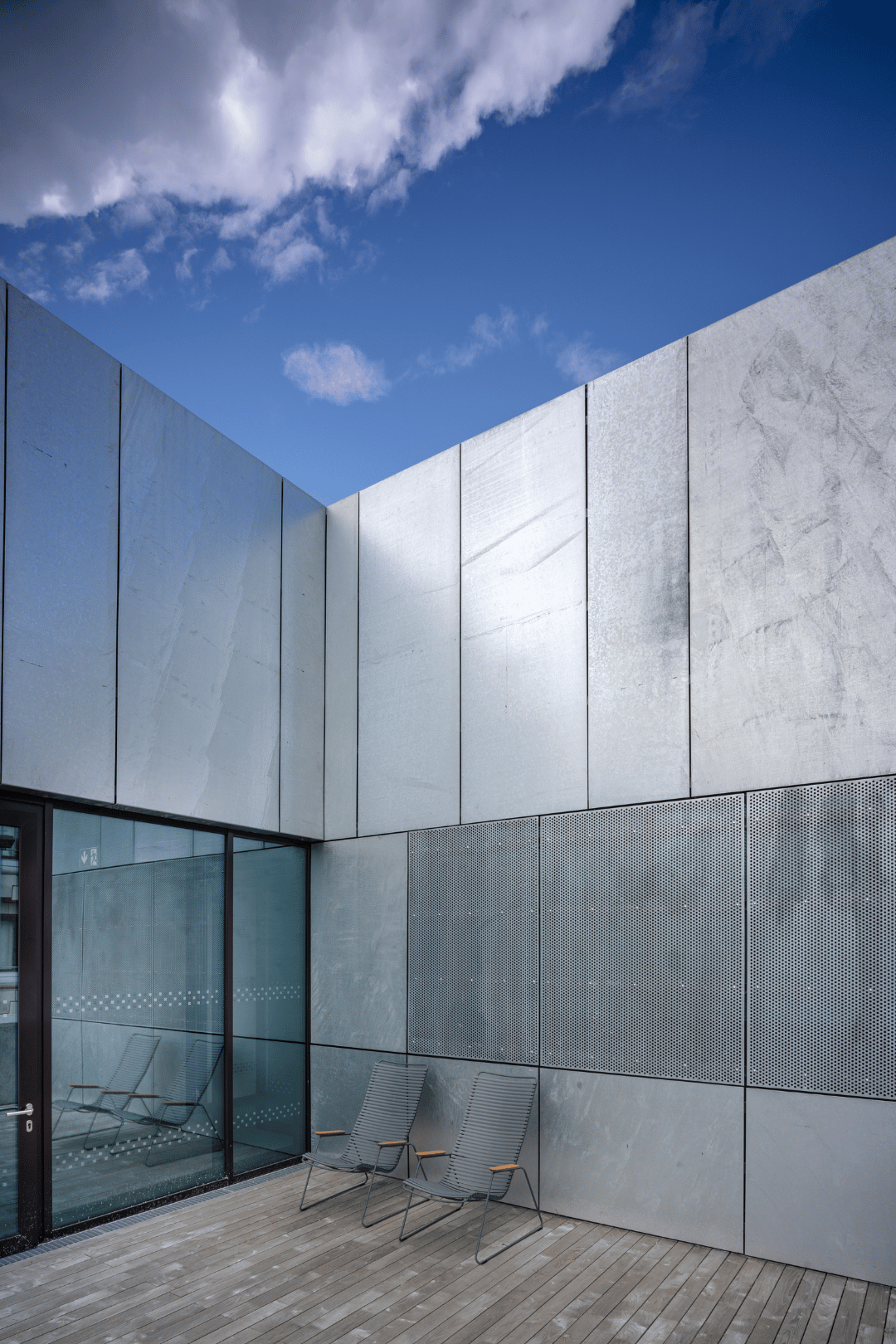
This new building is more than a technical laboratory – it is a physical manifestation of intent, a space that embodies precision and exemplifies purposeful design. The façade of hot dip galvanized steel plate unites durability with architectural restraint, quietly underscoring how built form and scientific pursuit can enrich one another. It is a place where architecture makes innovation visible – and where research finds its ideal setting.
Project Information
Architect: AV1 Architekten GmbH, asplan architekten
Construction Agency: Landesbetrieb LBB
© Michael Heinrich
- UK & Ireland
- Clevedon, England
- UK & Ireland
- UK & Ireland
- Bochum, Germany
- Putbus, Germany
- Inverkip, Scotland
- Rhineland, Germany
- Belfast, Northern Ireland
- London