
Railway Experience Landscape, Putbus
A New Home for the “Racing Roland”
Anyone stepping off the train in Putbus does not arrive at an ordinary provincial station. Instead, the journey begins with a step back in time for railway enthusiasts. The “Racing Roland”, one of the last historic narrow-gauge railways operating within Germany’s regular public transport network, has shaped the character of the island of Rügen for more than a century. Its history is closely tied to the town itself. For visitors, the train is a major attraction; for island residents, it is an important part of local identity.
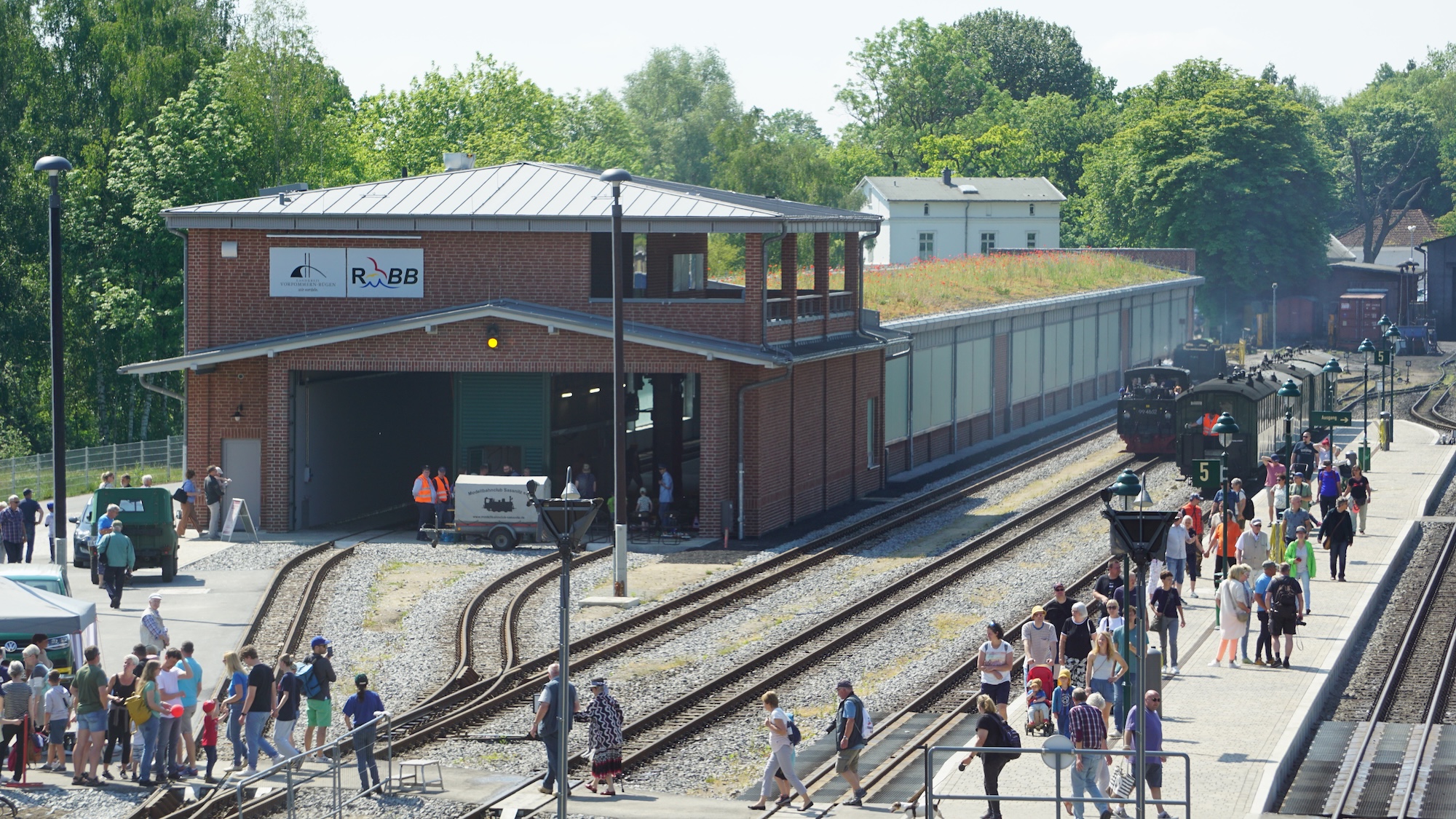
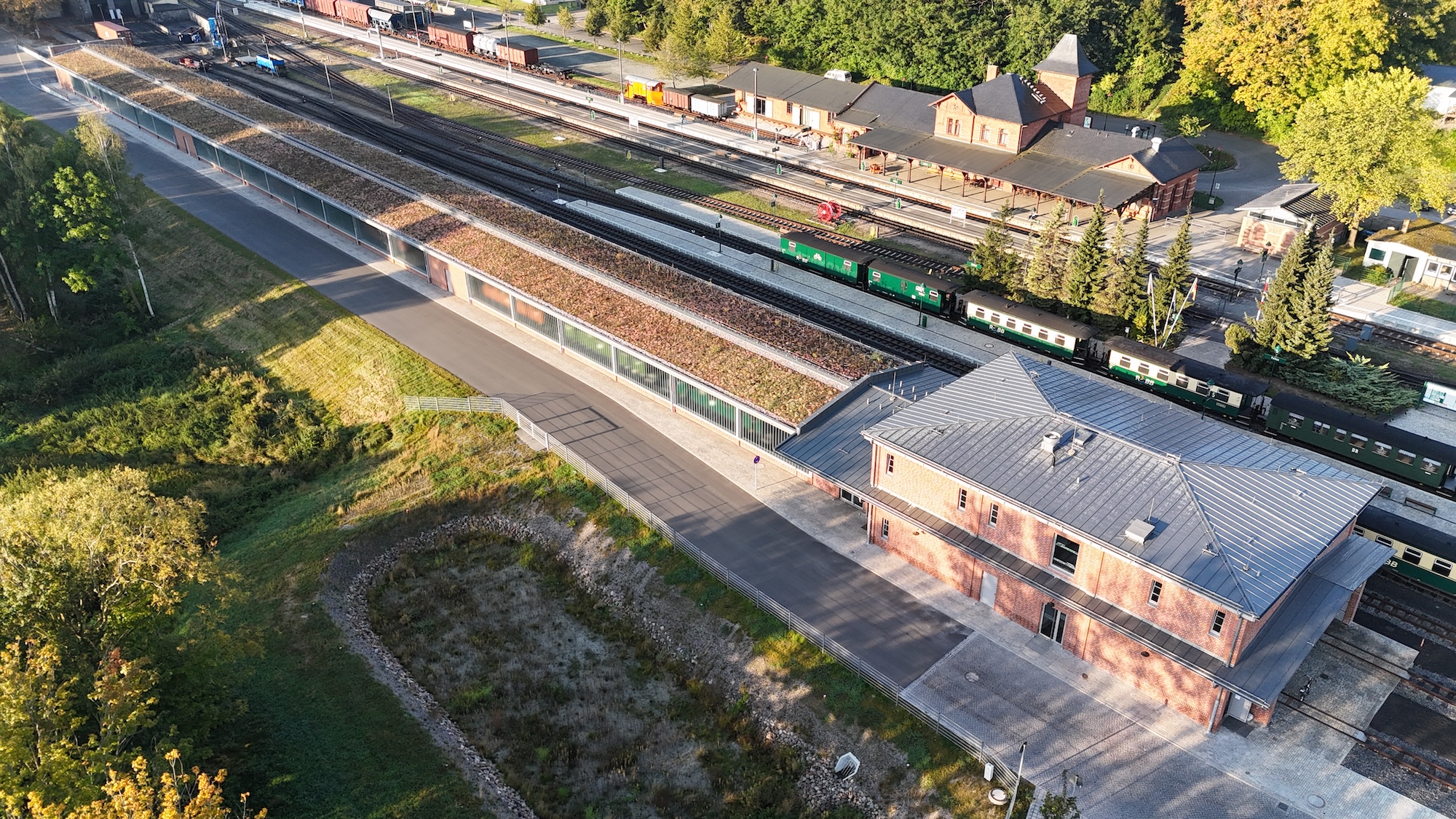
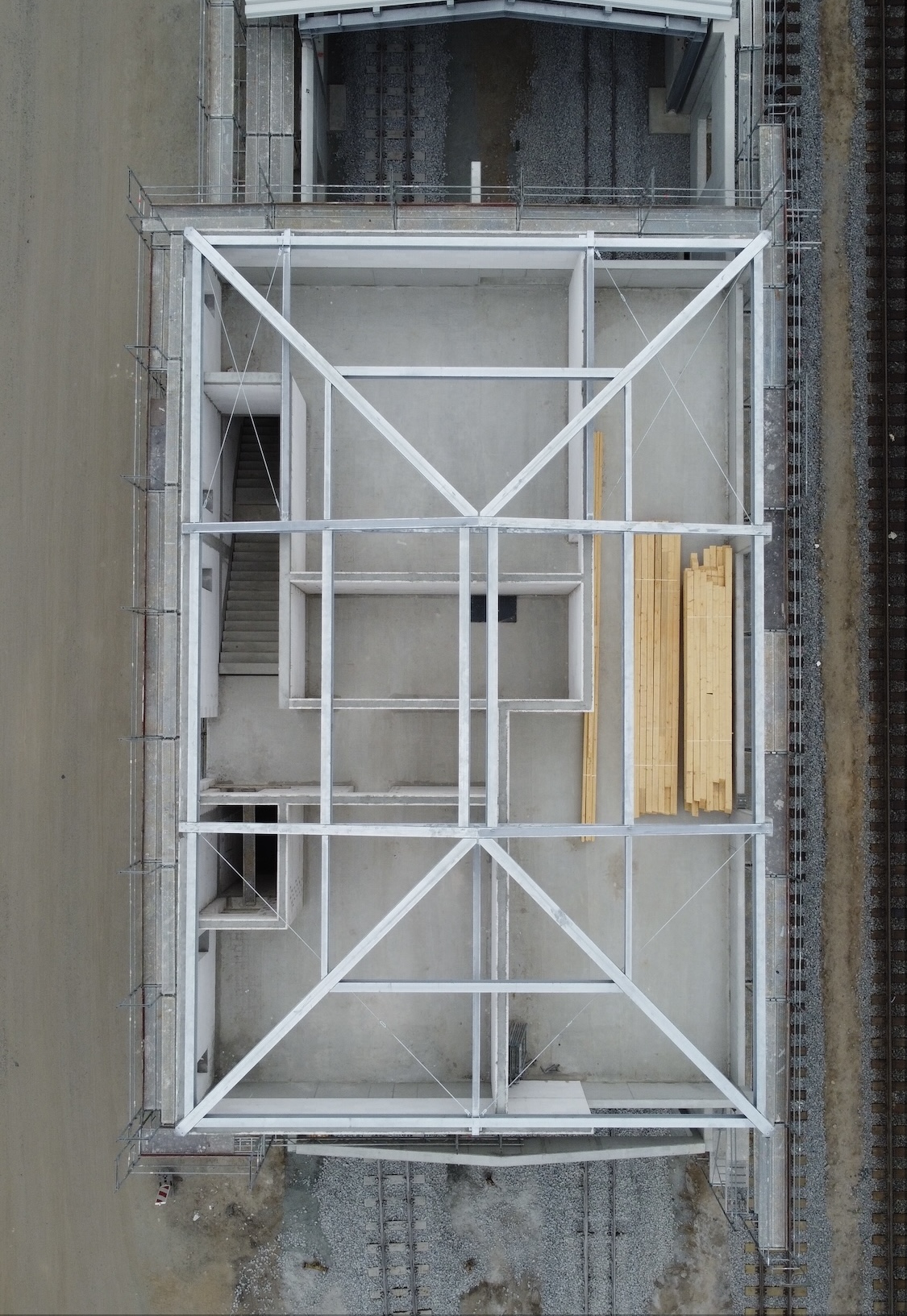
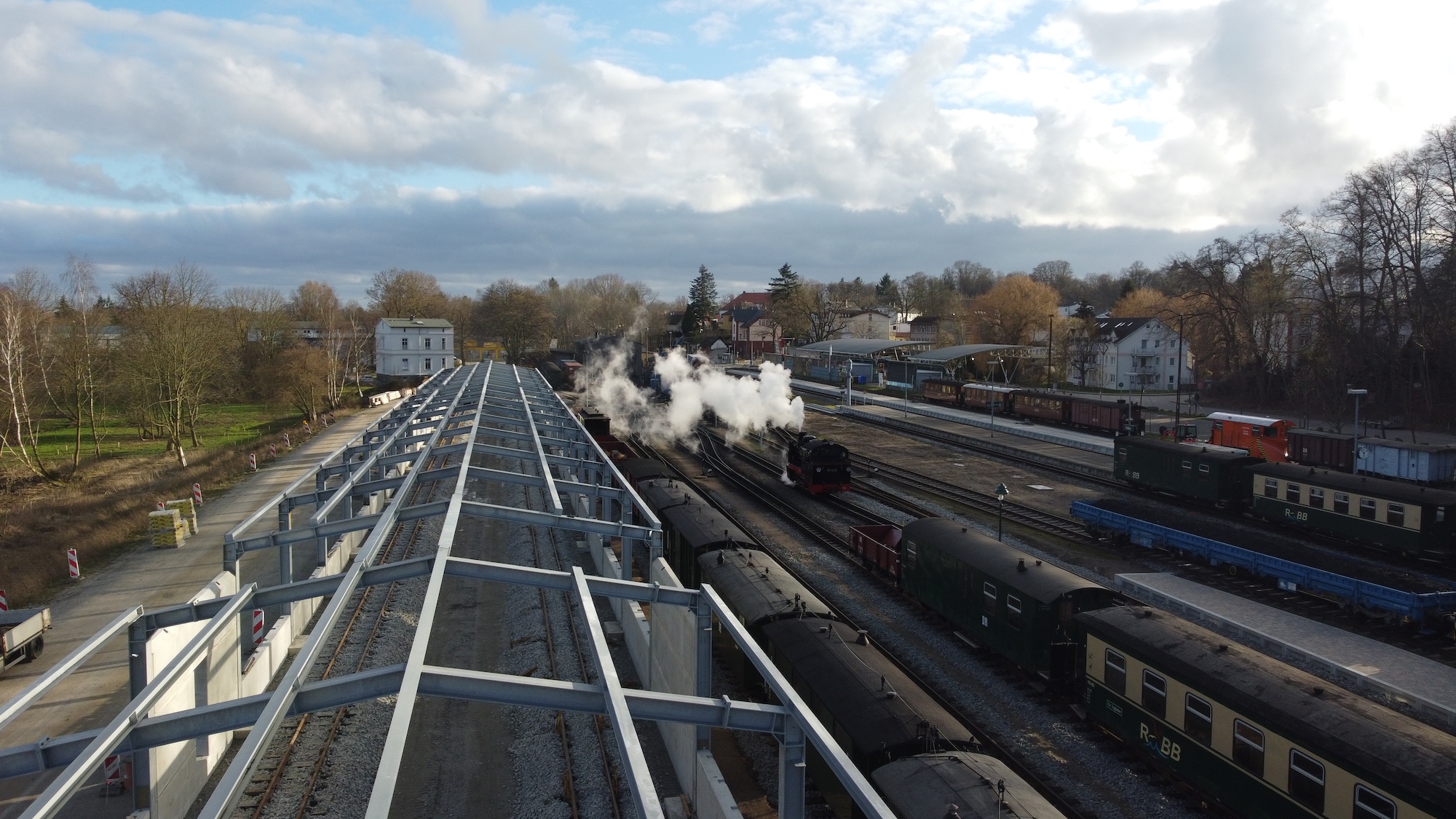
With the creation of the new Railway Experience Landscape at Putbus station, this history has now been given an architectural framework that carefully balances tradition with contemporary engineering. The new carriage hall, approximately 190 m long, forms a clear linear structure running parallel to the tracks. Its volume is deliberately restrained, while the structural frame establishes a rhythmic articulation along its length. In scale and proportion, the building responds to the historic station ensemble, translating traditional railway typologies into a contemporary architectural language.
The original workshop structures dating from the founding of the narrow-gauge railway no longer met modern safety standards or the operational requirements of a contemporary railway facility. A new, high-performance structure was therefore required for the maintenance and servicing of the historic locomotives and carriages.
At the same time, the project follows a curatorial ambition: technology should remain visible rather than hidden behind closed doors. An accessible viewing platform integrated into the end building allows visitors to overlook the railway operations. In this way, the workings of the railway are staged and interpreted without losing their authenticity.
The environmental conditions also presented a significant design challenge. The site is exposed to salty sea air, high humidity and strong winds due to its proximity to the Baltic Sea. As a result, the steel structure was designed for corrosion category C5. Durability therefore became an integral element of the architectural concept.

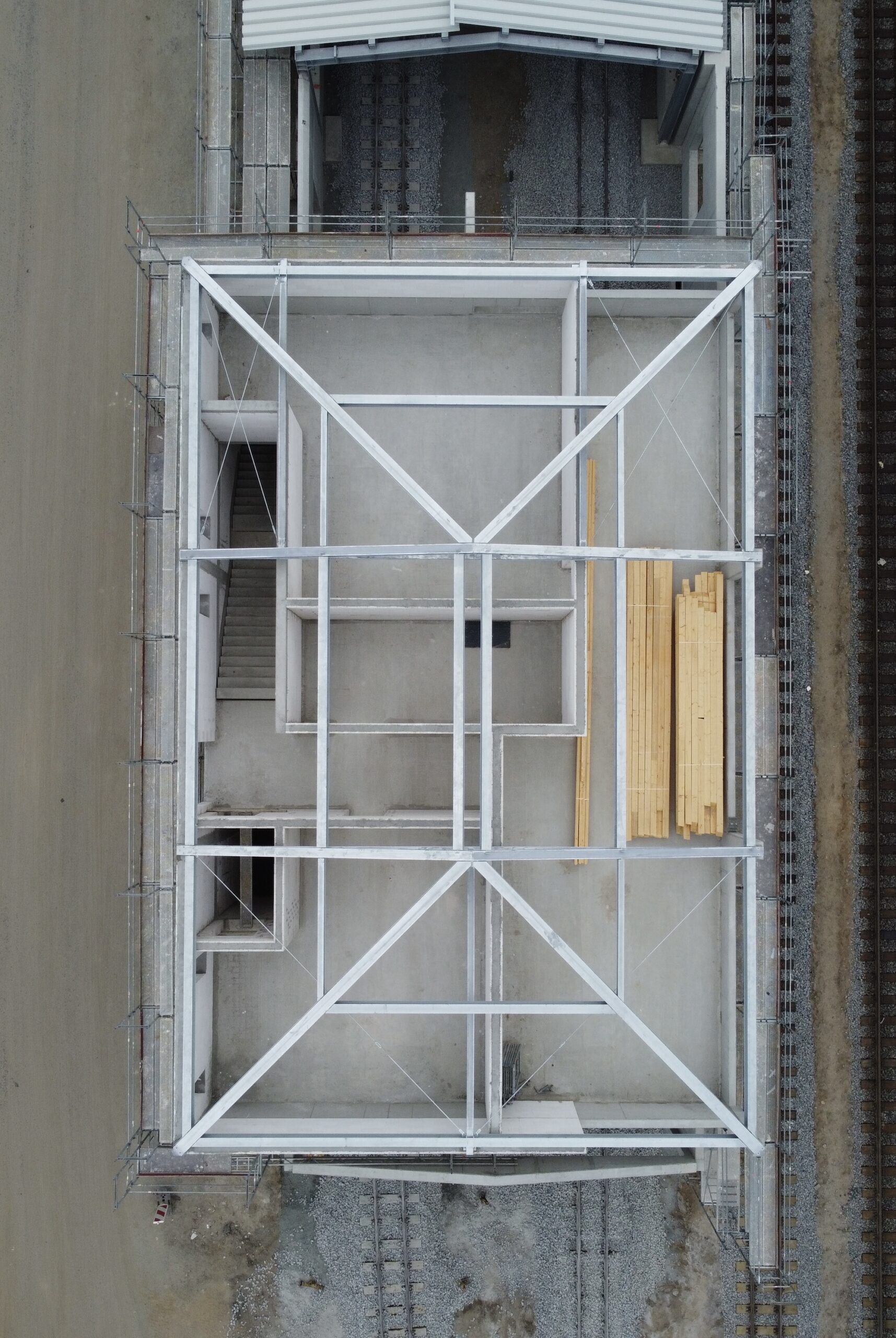
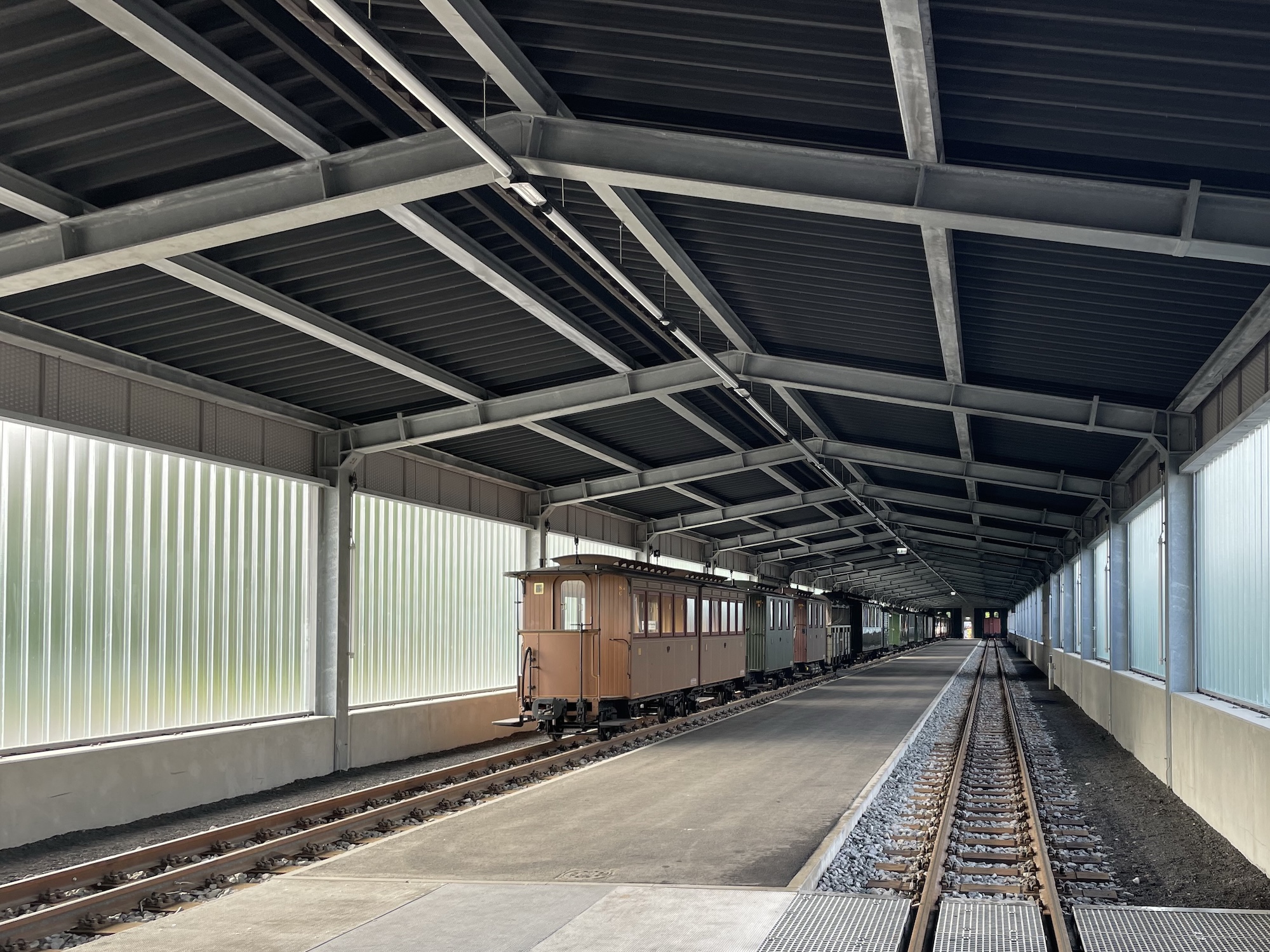
The carriage hall is conceived as a clearly expressed steel frame structure. A total of 24 two-pinned frames made from steel sections at 7-metre intervals, spanning two railway tracks and a central platform. The depth of the structure and its rhythmic geometry define the spatial character of the hall.
More than 130 t of hot dip galvanized structural steel were used in the project. Galvanizing was incorporated as a fundamental design decision to ensure long-term durability within the maritime environment. Purlins, substructures and the roof framework of the hipped roof at the entrance building are also hot dip galvanized.

Project Information
Planning: Höhne GmbH & Co. KG
- UK & Ireland
- Clevedon, England
- UK & Ireland
- UK & Ireland
- Bochum, Germany
- Putbus, Germany
- Inverkip, Scotland
- Rhineland, Germany
- Belfast, Northern Ireland
- London