
circular construction:
Galvanized steel
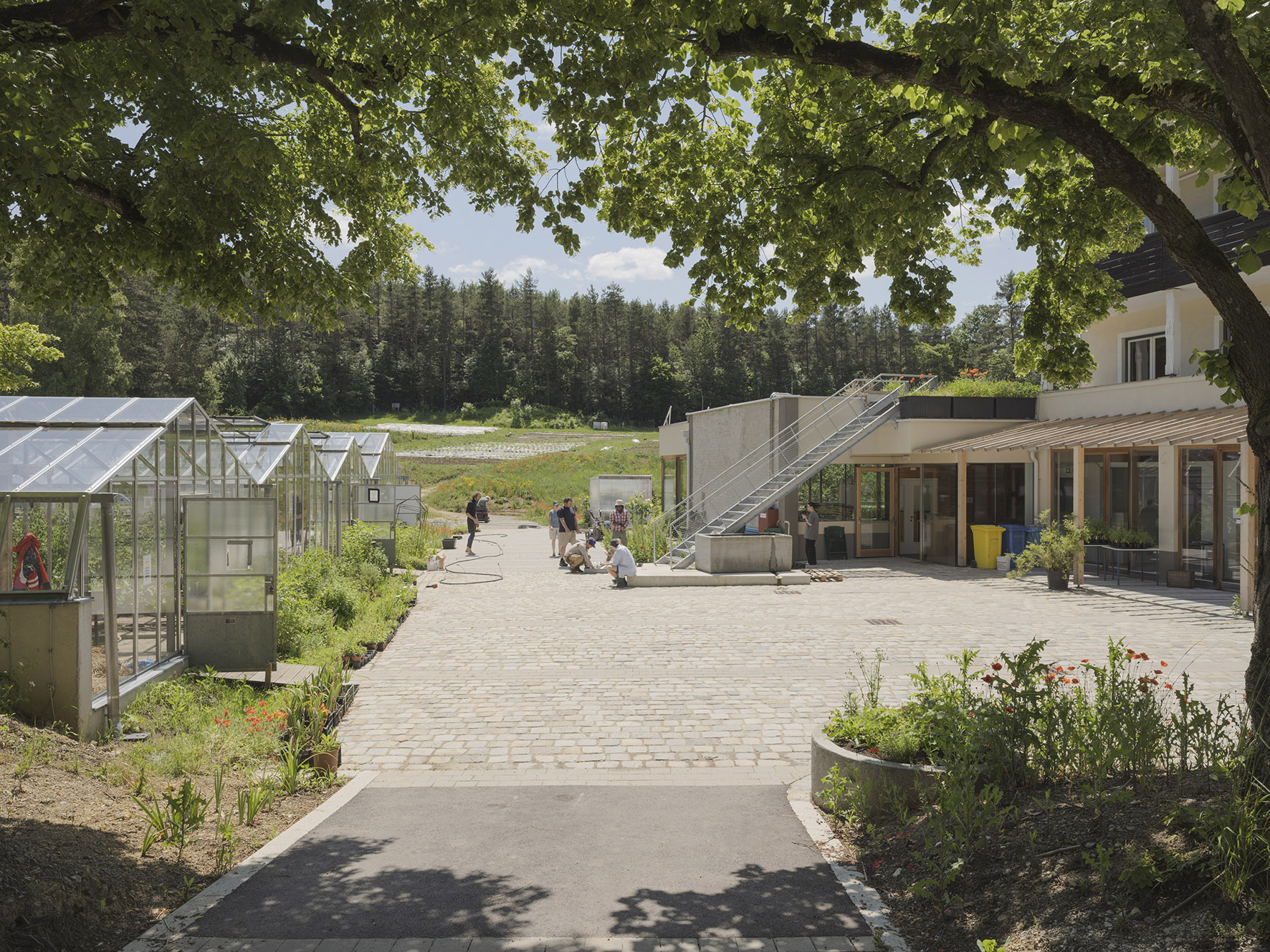
An hour outside Vienna, stands a greenhouse that has an interesting story to tell. It’s hot-dip galvanized steel structure, dating back to the 1960s, once formed part of a nursery in St. Pölten.
After decades of use, it was dismantled, transported, and reassembled by a team of formerly homeless people and volunteers. Today, it forms the heart of VinziRast am Land, a socio-economic project that redefines circular construction with steel, combining architecture with social purpose, material reuse, and long-term sustainability.

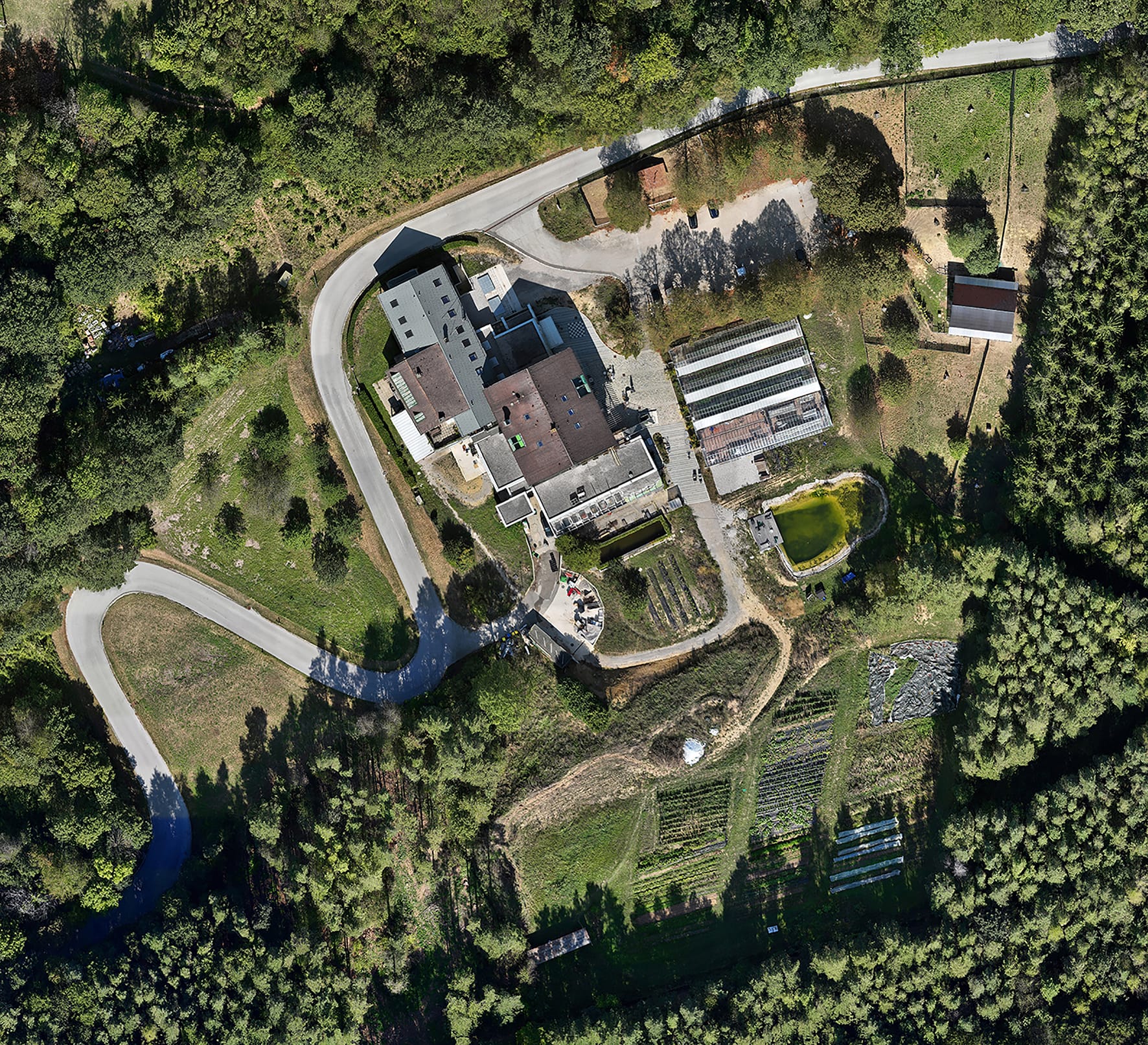
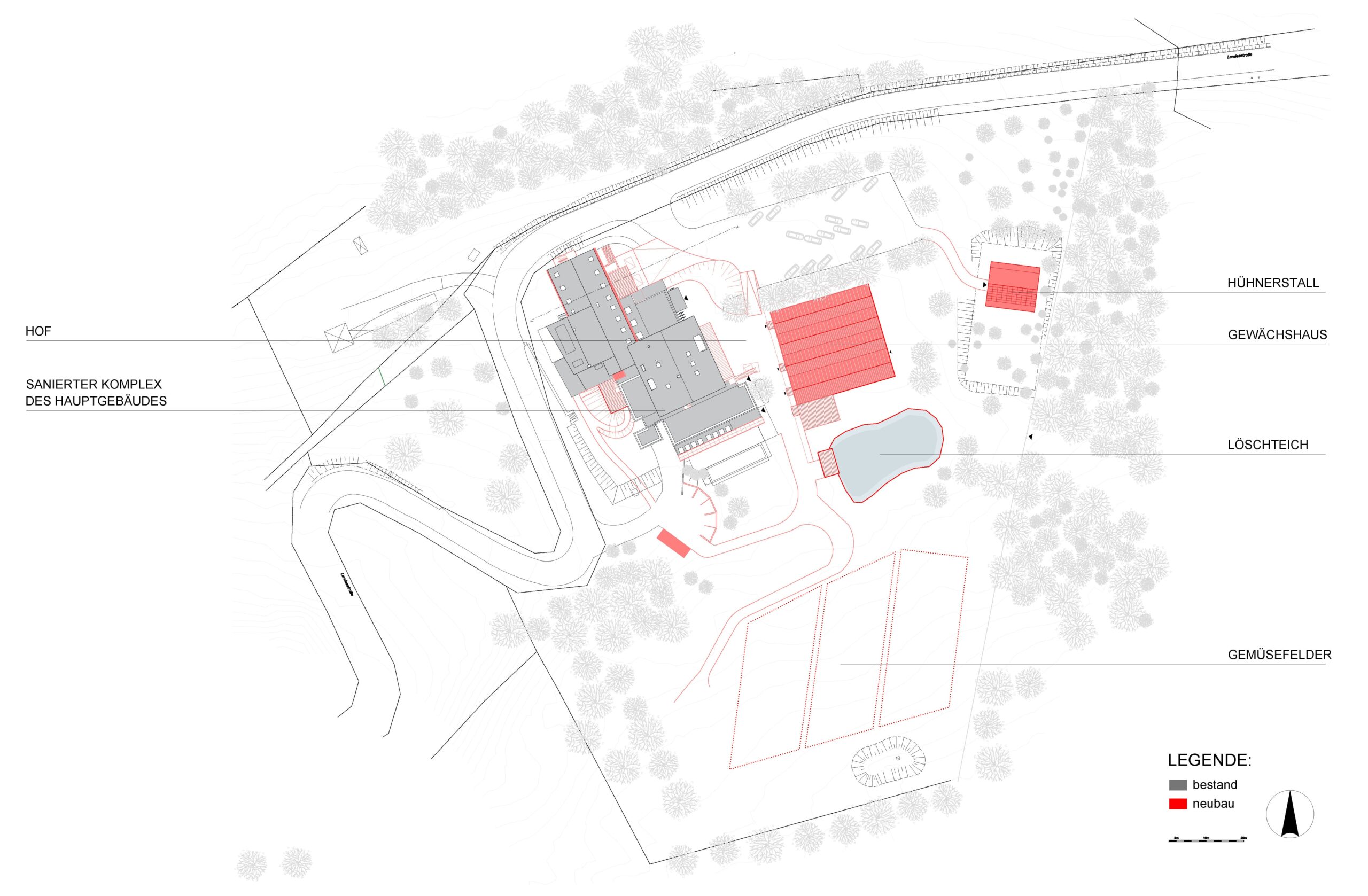
Covering 700 m2, the building now serves multiple roles: growing vegetables and herbs, supporting community agriculture, and soon, hosting events. The south-west wing, called the Orangery, will provide space for cultural and social gatherings. The greenhouse thus becomes not only a centre of agricultural activity but also the architectural and social focus of the entire site.

The project began with an abandoned hotel complex and luxury restaurant, four buildings from different decades, left to decay after bankruptcy. The Vienna-based practice gaupenraub+/–, led by Prof. Alexander Hagner and Ulrike Schartner, worked closely with future residents, craft schools, and volunteers to transform the site into a multifunctional community space: offering homes for formerly homeless people, a courtyard kitchen, seminar and communal rooms, a farm shop, and, at its heart, the reconstructed greenhouse.
Both the planning and execution followed circular construction principles: reused paving stones, a converted barn turned chicken coop, and repurposed furniture made from galvanized steel. Each component of the greenhouse was carefully dismantled in St. Pölten, sorted, transported, and reassembled on-site with the help of two retired fitters. Only the glazing was replaced for safety and technical reasons.
New elements such as escape stairs, balconies, and railings were added, all made from hot-dip galvanized steel, continuing the design language of the original structure while meeting modern structural requirements. The material contributes not only durability and low maintenance but also a formal clarity that defines the architectural expression.

The project has been recognised for its conscious rejection of architectural vanity in favour of an approach that values what already exists, honours history, and treats social responsibility as a design principle, not an afterthought.
The greenhouse in particular highlights “the longevity and reusability of galvanized steel structures.”
VinziRast am Land stands as a compelling example of how architecture can embody both circular and social values — rooted in respect for the existing, with clarity of construction and an openness to the transformative power of the built environment.

Project information
Architect: gaupenraup+/-, Prof. Alexander Hagner, Ulrike Schartner
© gaupenraub+ / Martin Steiger
- London
- London
- Germany
- Suffolk
- Rosenheim
- London
- Berlin, Germany
- London