
Steel and Stone
Burg Neu-Aspermont, Graubünden
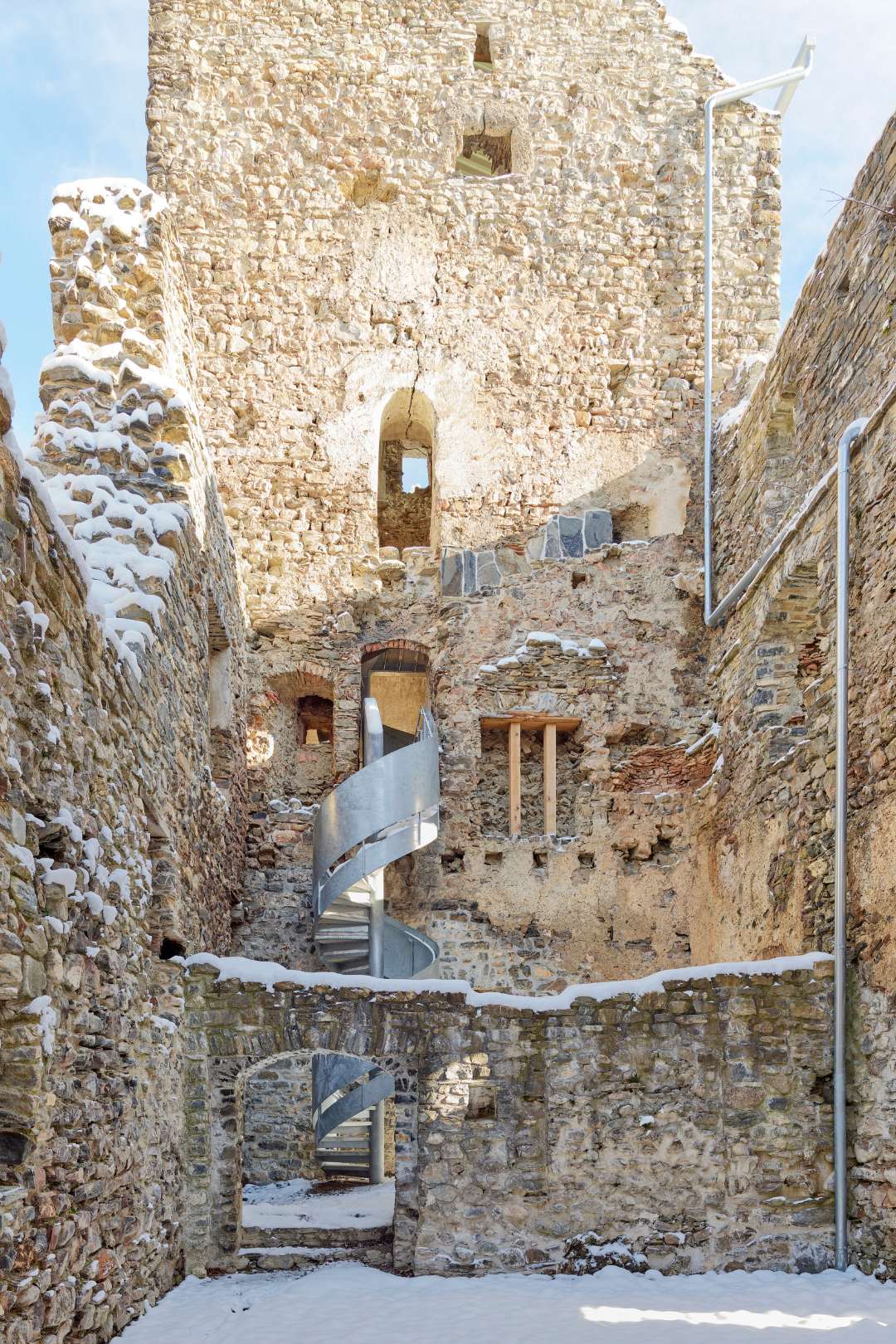
High above the Rhine valley in the Swiss canton of Graubünden, perched on a rocky outcrop, the ruins of Burg Neu-Aspermont stand in quiet defiance. A late-medieval hilltop fortress, with its square keep and encircling wall, the site had long been at risk of irreversible decay. Through a masterfully restrained and precisely executed intervention, the ruins have been preserved and made accessible once again. This was not in spite of modern steel architecture, but because of it.
Completed in 2023, the restoration was carried out by Jonger Architekten with Michele Vassella Architekt and Conzett Bronzini Partner as structural engineers. The project demonstrates how hot dip galvanized steel can enhance conservation, support functionality and enrich atmosphere in heritage settings. An approach to architecture that deliberately steps back while achieving something quietly powerful.
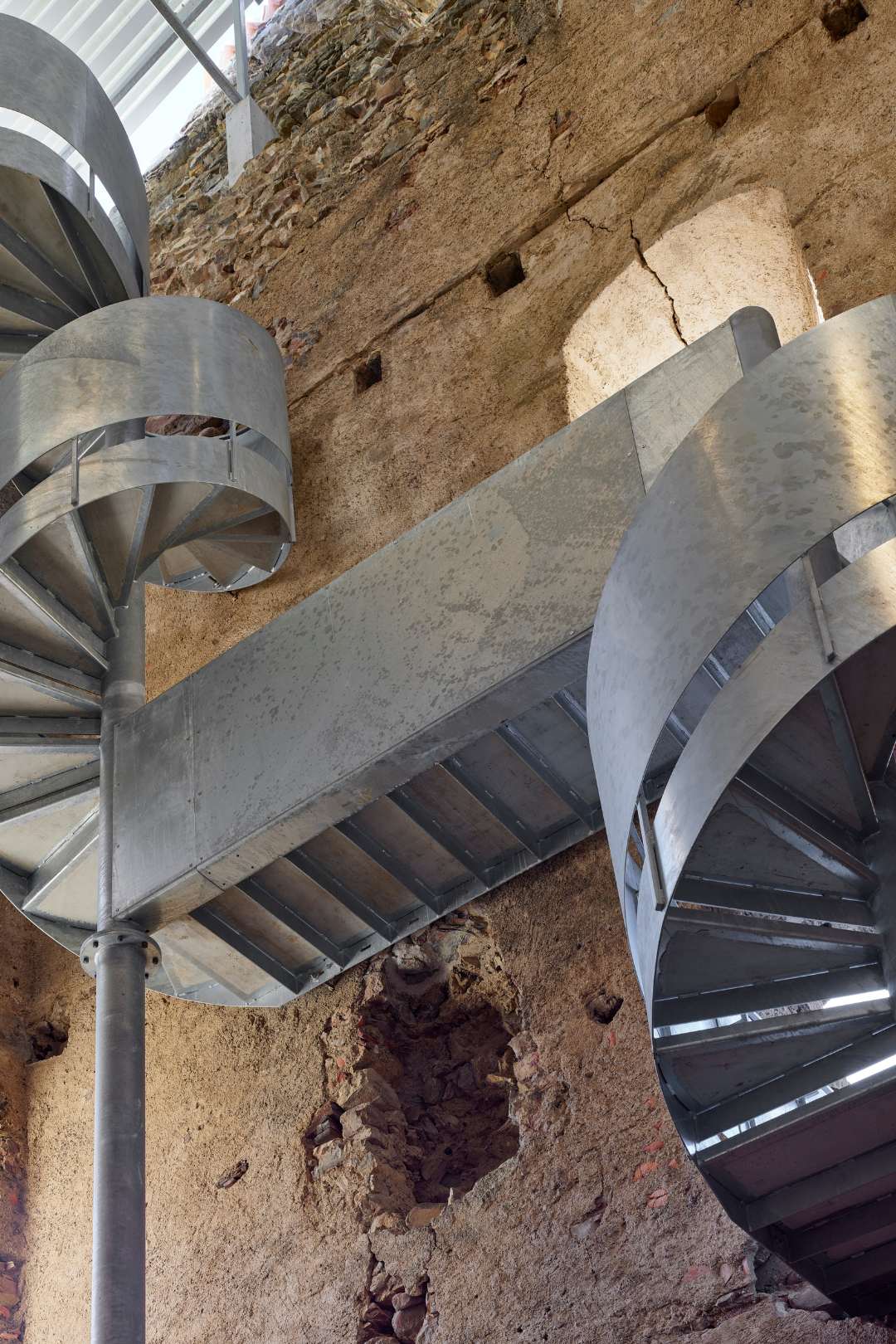
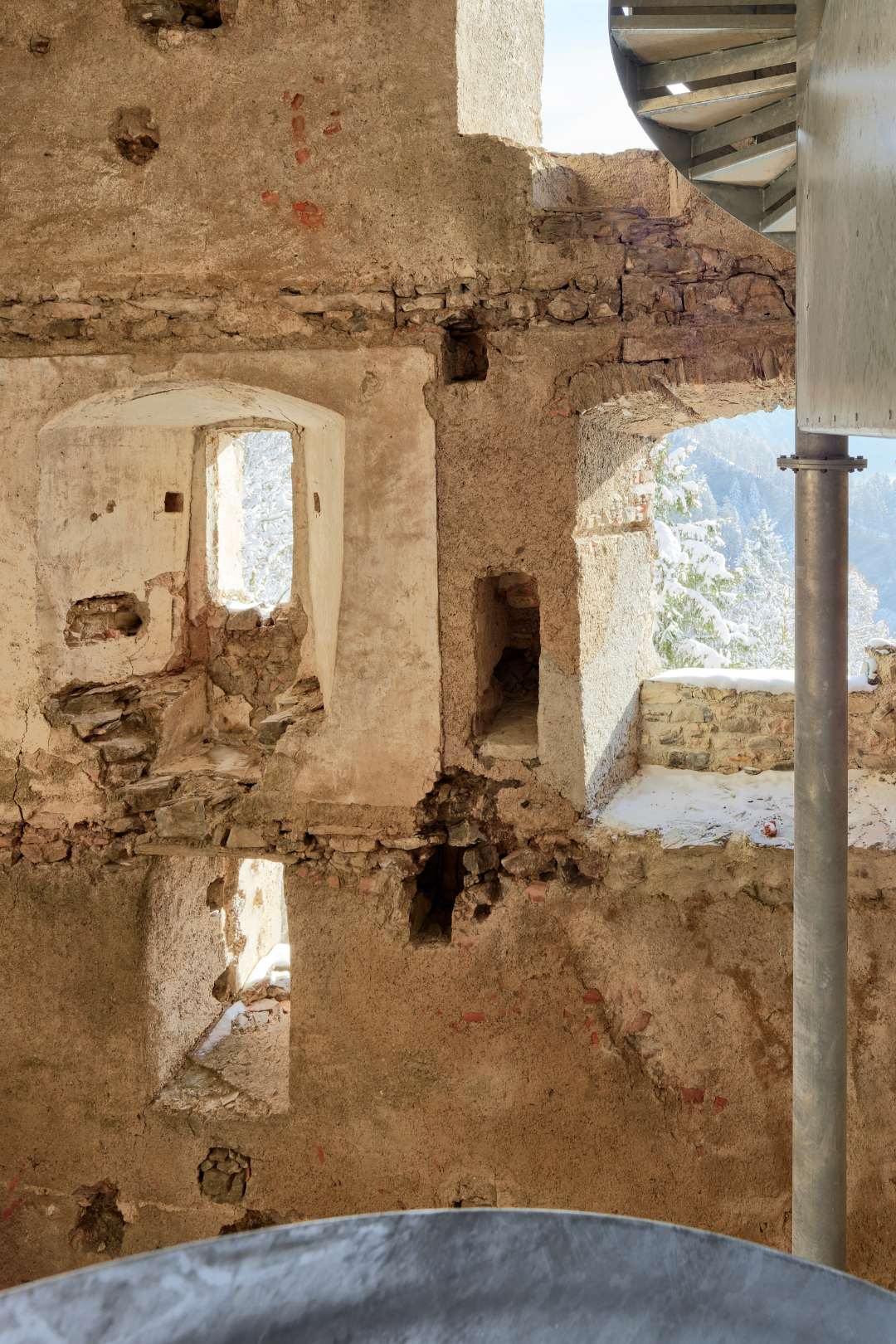
At the centre of the intervention is a delicate spiral staircase, fabricated from hot dip galvanized steel. It threads through the tower ruin with remarkable lightness, opening up new routes through the structure and offering fresh perspectives on the relationship between landscape, architecture and memory.
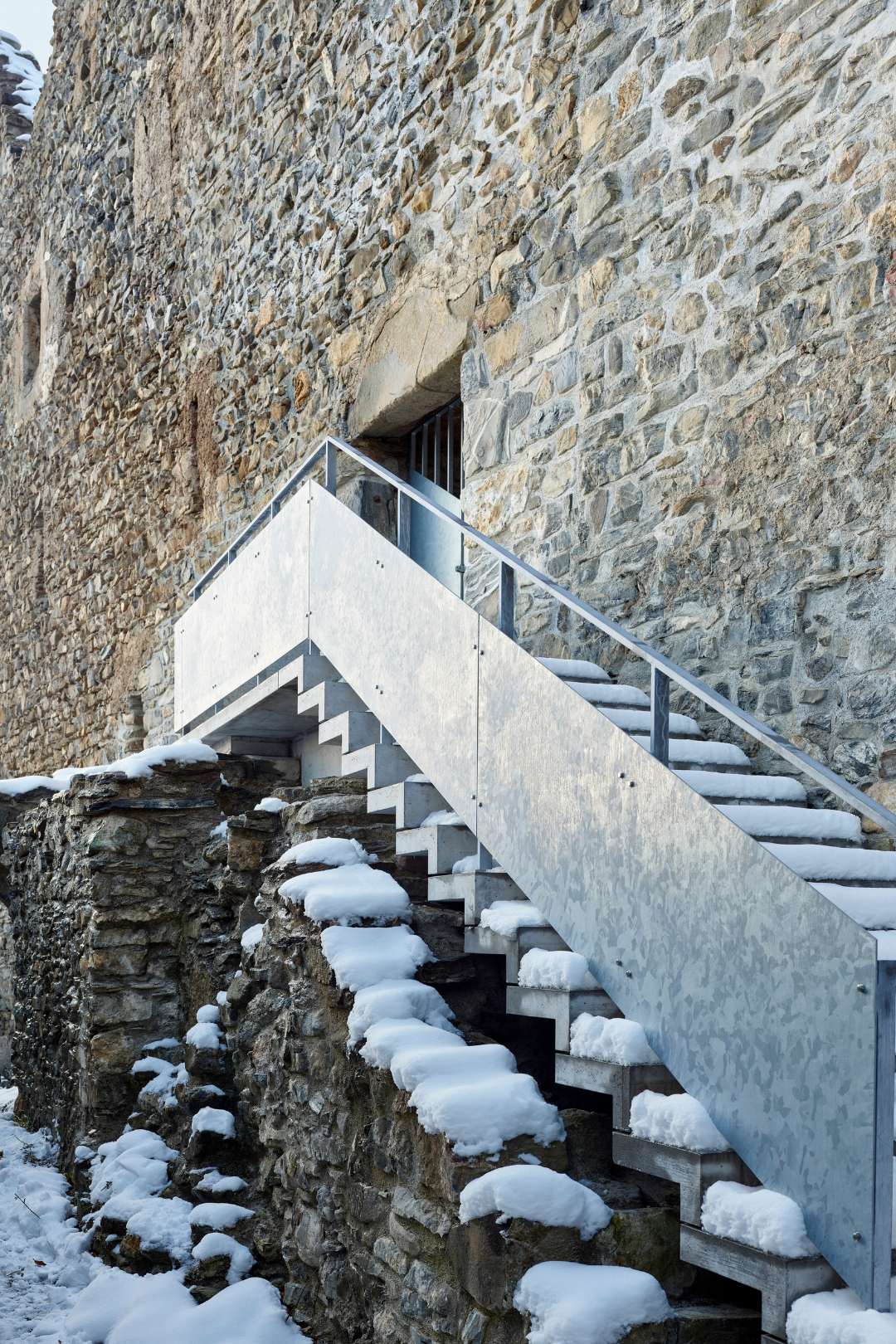
Every element of the staircase responds with care to the existing fabric. Openings, wall lines and irregular geometries are absorbed into the design. The historic masonry is touched only where absolutely necessary. Three slender steel columns support the structure. Their foundations were placed outside any load-bearing remnants of the original stonework to ensure that the old walls remain unstressed.
The staircase was pre-fabricated using point cloud surveying, flown in by helicopter in six parts and assembled on site. This minimal intervention achieves maximum accuracy.
The steelwork is built with U-section profiles and flat steel stiffeners. It is robust enough to handle dynamic loads. Here, galvanizing does more than protect. It creates a surface that weathers gently in the alpine climate. The result sits confidently within the ruin, a new layer in the life of the castle that is contemporary in material yet entirely rooted in its setting.
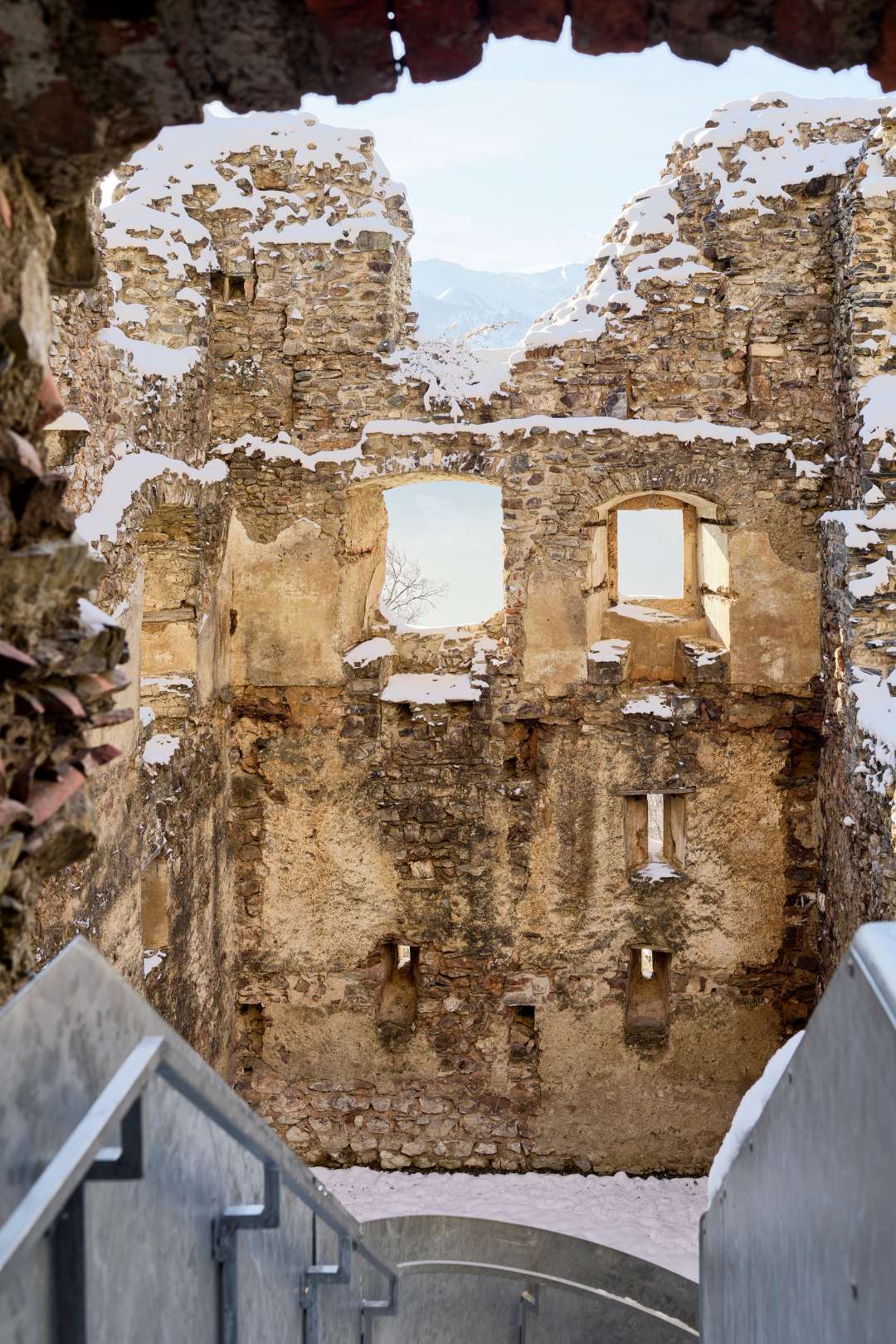
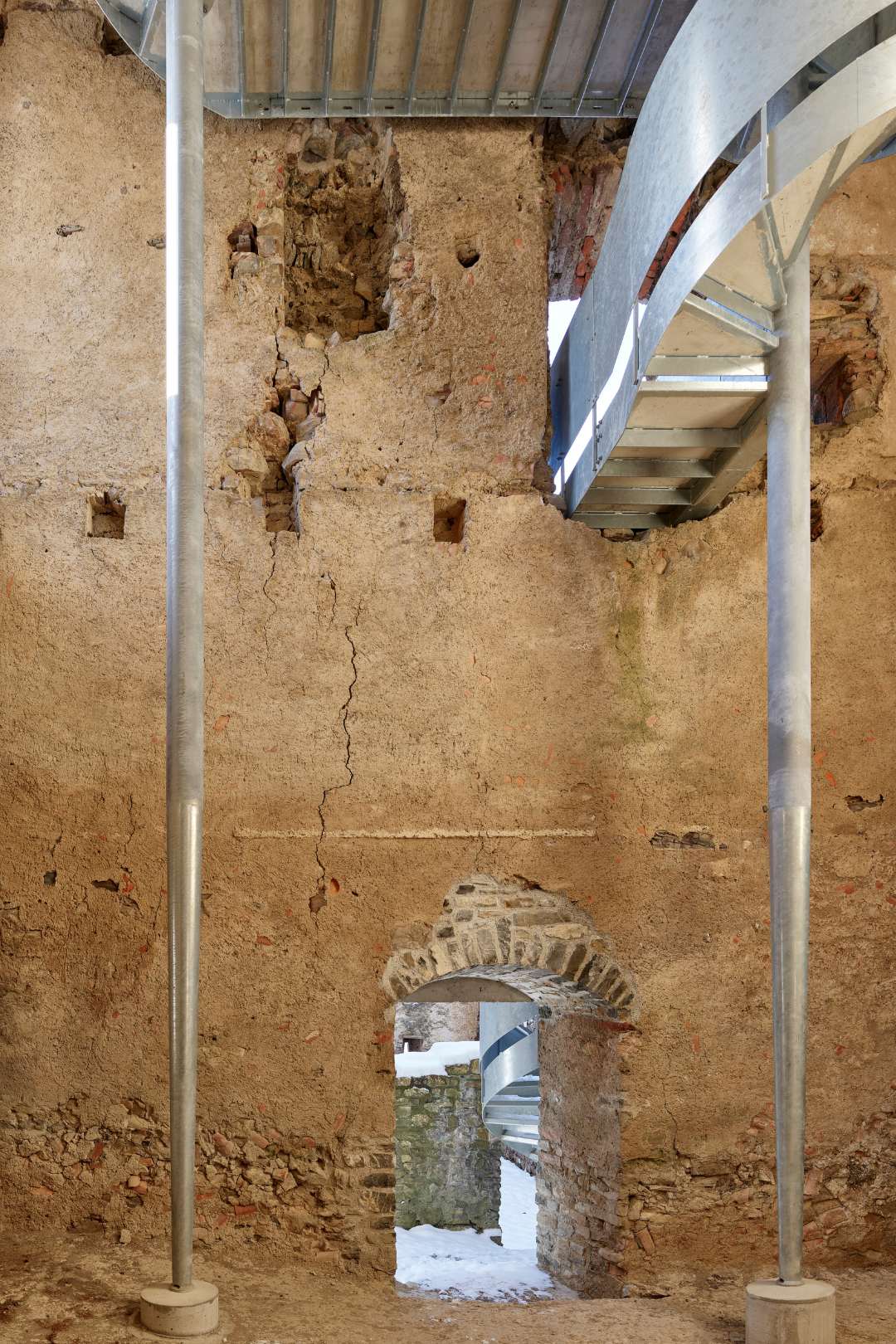
Shelter, Light and the Atmosphere of Ruin
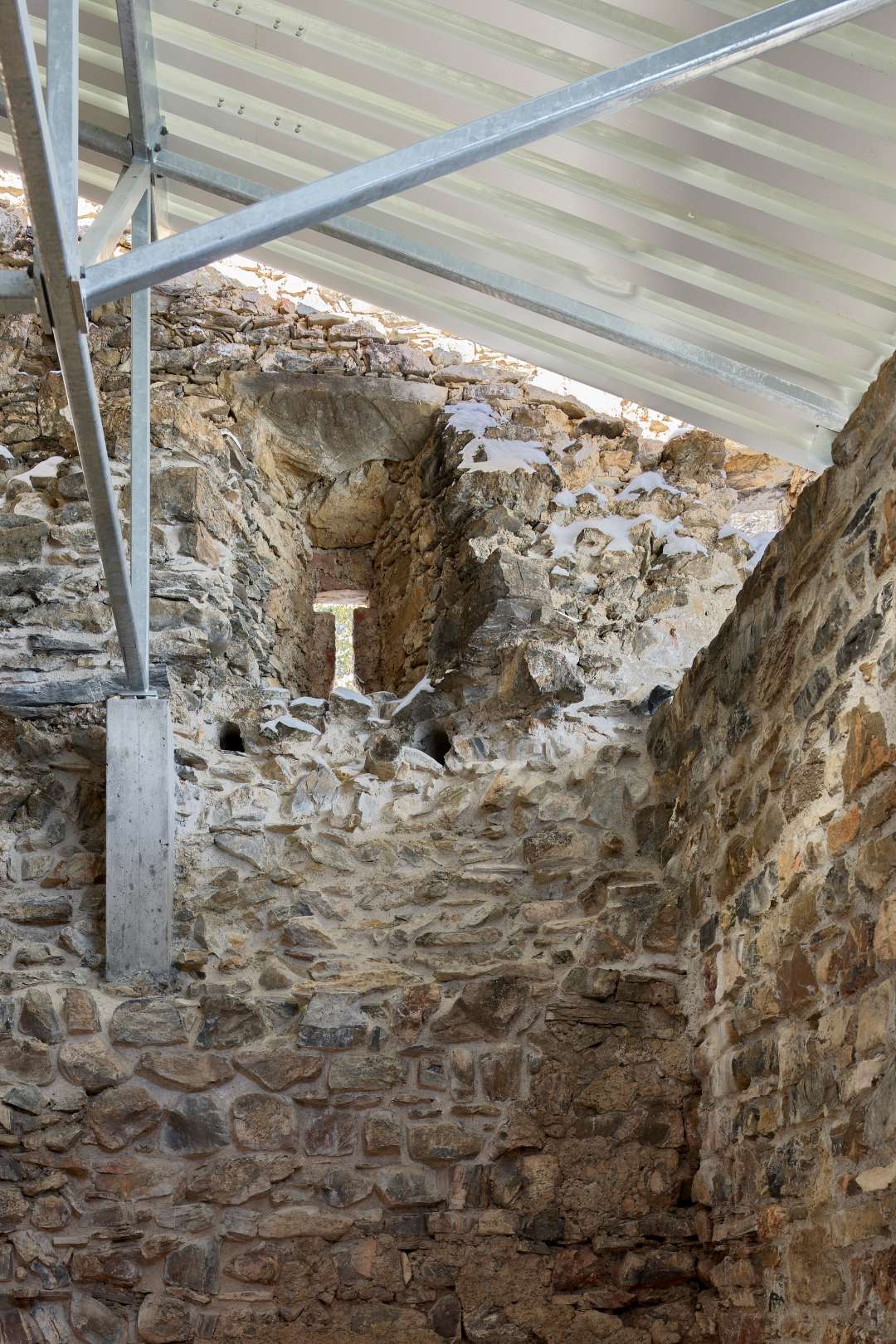
Above, a translucent canopy floats just inside the plane of the former roof ridge. Resting lightly on concrete pads embedded in the wall structure, the steel-framed roof is almost invisible from the outside. Inside, it softens the light, casting a diffuse glow that shifts with the weather and animates the space below.
This is more than conservation. It is a way of re-reading the space.
What makes the project so compelling is its temporal honesty. Each intervention is clearly legible. Nothing is hidden or disguised. The staircase, the roof and the supports are additions that enhance rather than compete. They are honest, reversible and respectful.
Project info
Architect: Jonger Architekten, Michele Vassella Architekt
© Philip Heckhausen
- Clevedon, England
- London
- Germany
- Suffolk
- Rosenheim
- London
- Berlin, Germany
- London