
Harzer Hexenreich Observation Tower
A Witch’s Broom in Steel and Zinc
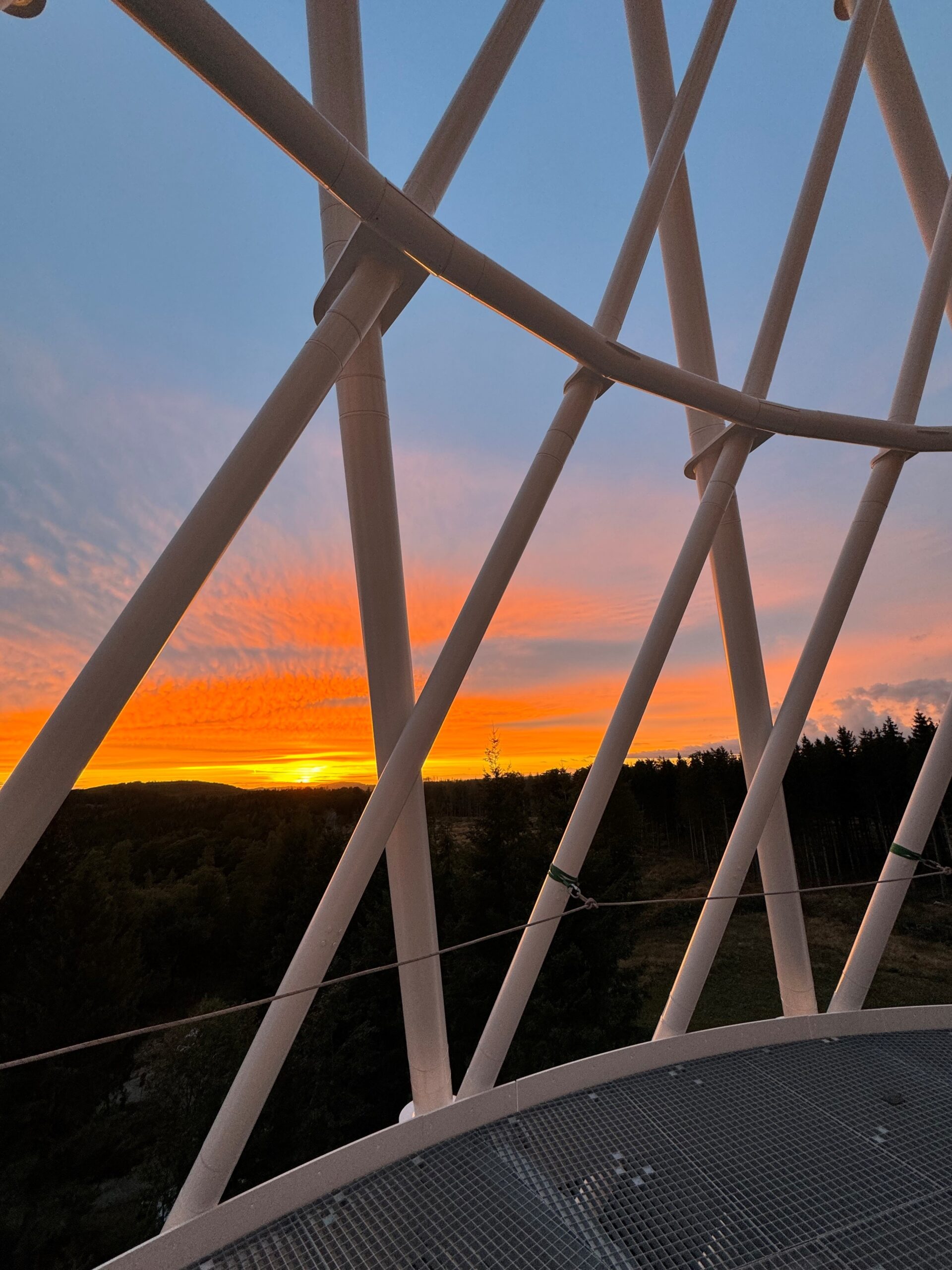
Harzer Hexenreich Observation Tower
A Witch’s Broom
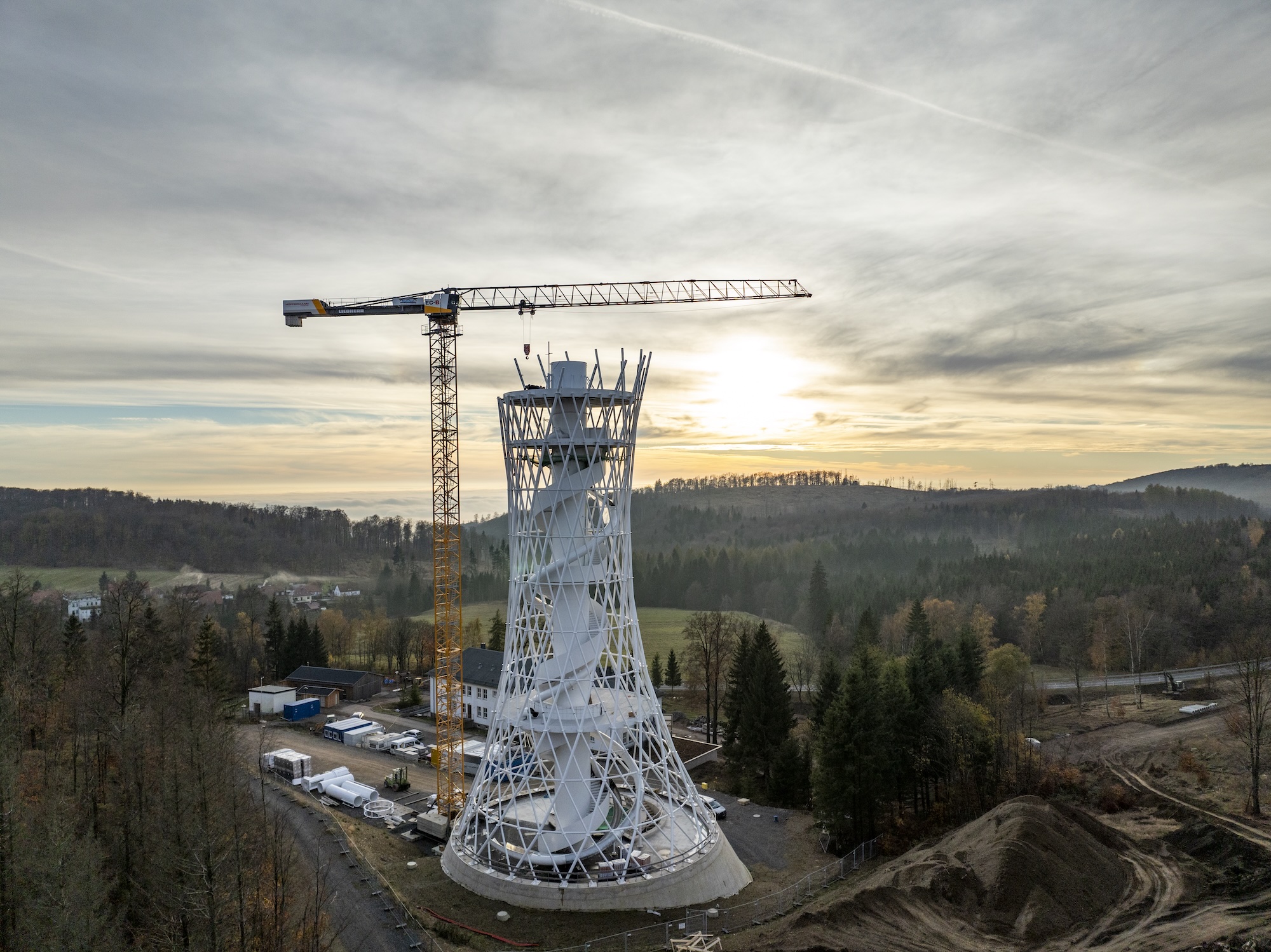
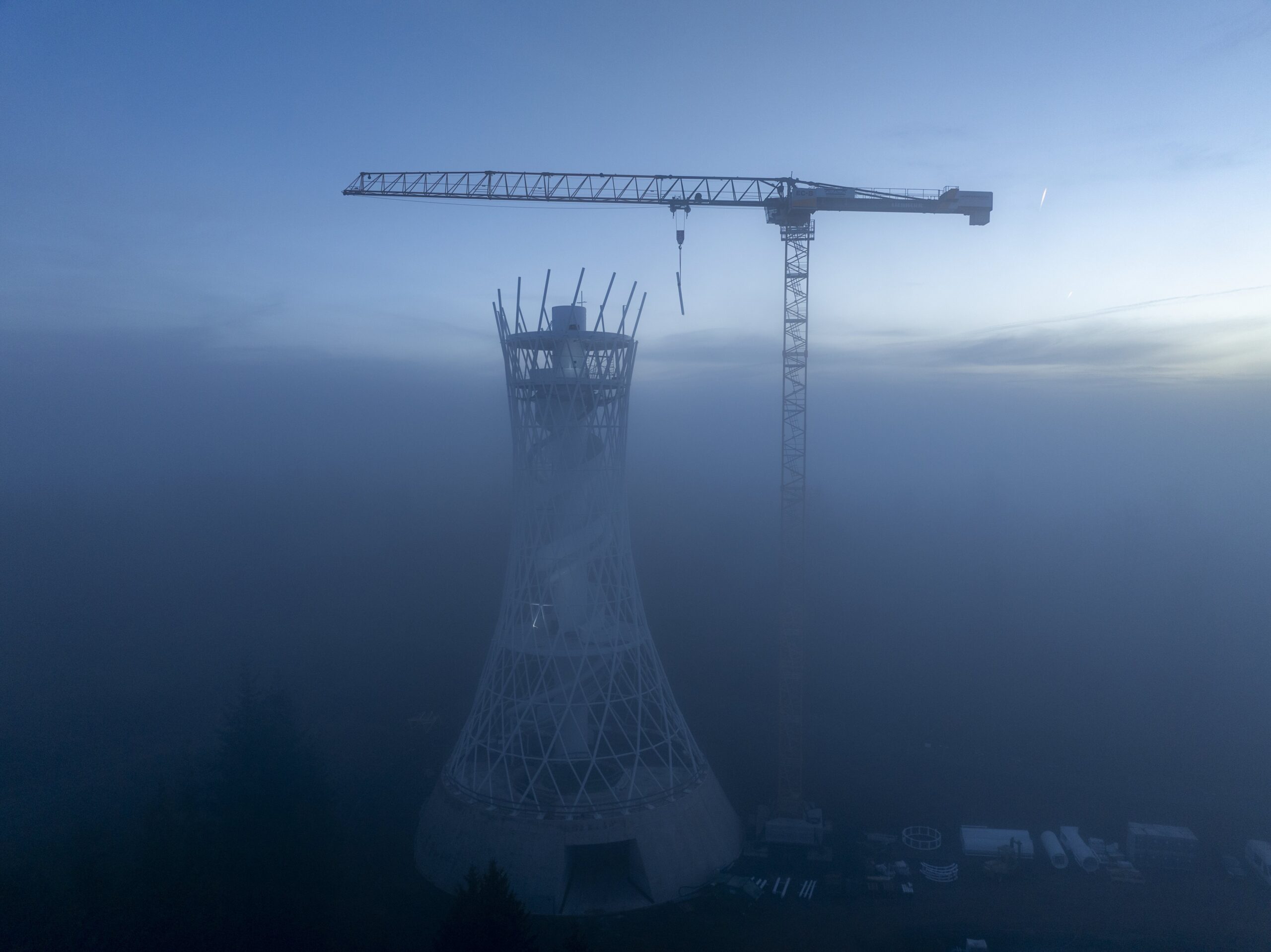
In the Thuringian area of the Harz Mountains, a new symbol has risen: the Harzer Hexenreich, a roughly 70m high observation tower near Ellrich. Its striking form, an oversized witch’s broom, draws on regional mythology while signalling a clear commitment to durable construction using steel and high-quality corrosion protection.
The playful structure demonstrates how expressive form, complex steel geometries and a carefully considered corrosion protection strategy can come together to create a robust, low-maintenance building.
The tower is organised around a central tube, 3.40 m in diameter, housing a lift, accompanied by a 1.45 m diameter antenna mast. Wrapped around this core is a net-like external structure in the form of an asymmetrical rotational hyperboloid representing the “bundle of twigs” of a witch’s broom.
At 43 m, a glazed viewing platform provides panoramic views and is fully accessible via the lift. For the descent, visitors can choose between two slides, one of which spirals almost 100 m around the tower. At ground level, an interactive exhibition on witchcraft and folklore expands the visitor offer, complemented by an adventure playground and catering facilities housed in the former East German border-guard compound.
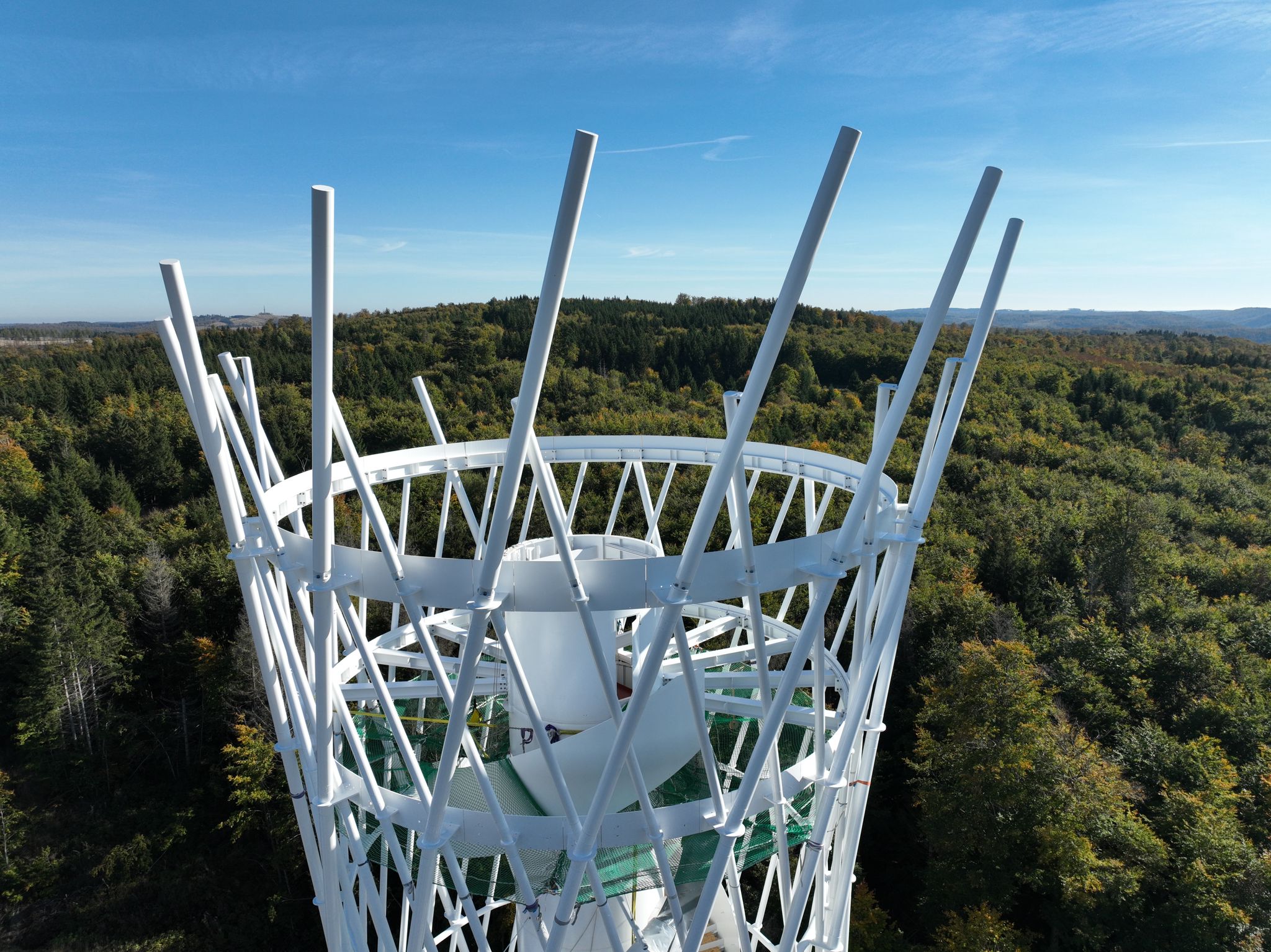
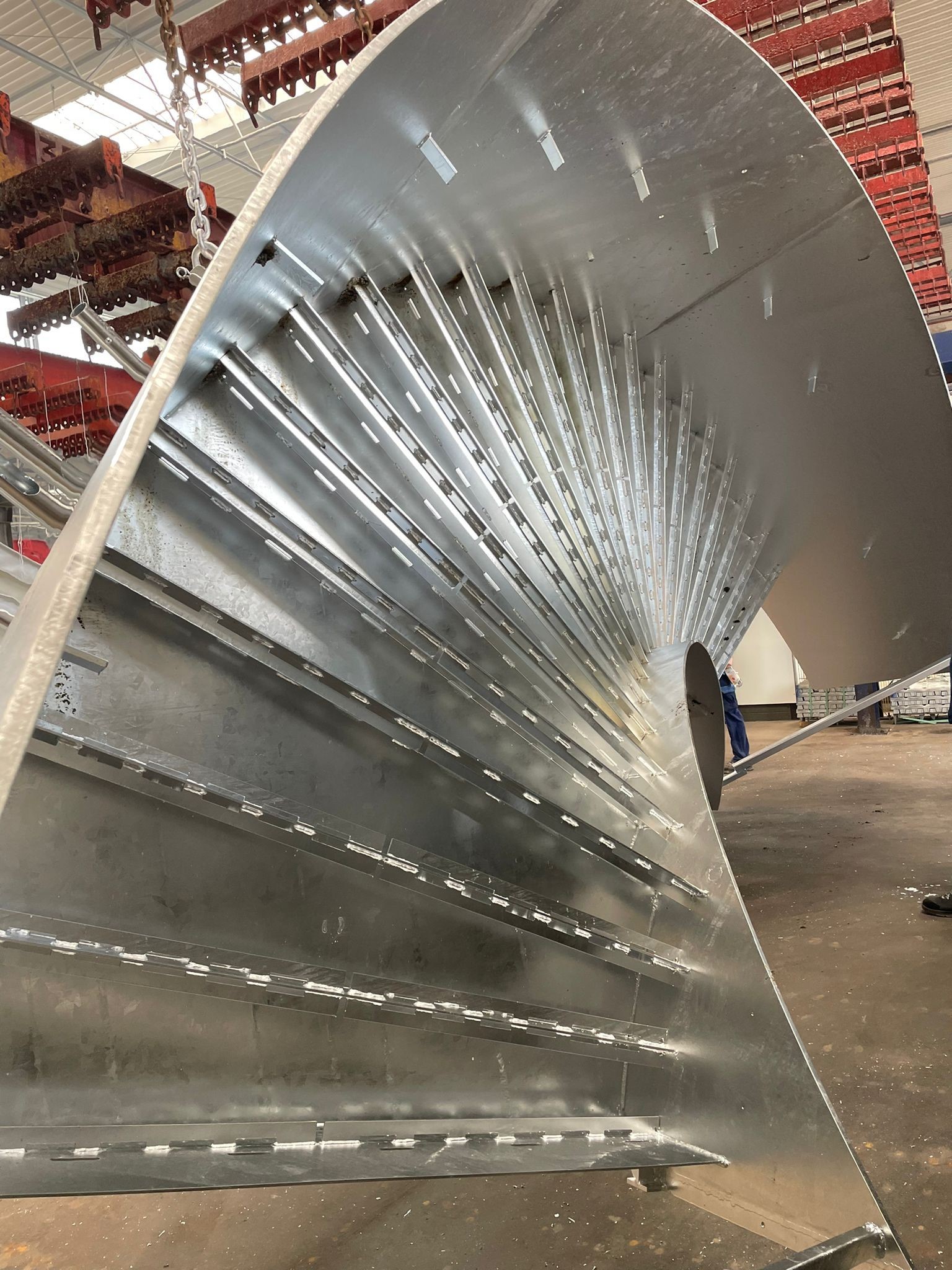
The exposed location in the Harz places high demands on the long-term protection of the steel structure. Increased rainfall, temperature fluctuations and strong winds create an aggressive environment that had to be addressed from the very beginning.
For both architects and structural engineers it quickly became clear: only a rigorously planned corrosion protection concept to the highest protection category, would meet the requirements for service life, safety and cost efficiency. The solution lay in a duplex system combining hot dip galvanizing with a complementary coating.
The tower’s platforms are designed as robust steel frameworks subjected to significant stresses from visitor traffic, weather and regular cleaning. These areas required a corrosion protection system with maximum mechanical resistance.
Hot dip galvanizing first provides a continuous zinc coating that acts both as a barrier layer and, through cathodic protection, remains effective even if the surface is slightly damaged. The subsequent coating completes the duplex system, increases resistance further and extends the expected protection period significantly.
In practical terms, this results in strong resistance to impact and abrasion, the elimination of maintenance cycles and reliable life-cycle cost predictability.
Project Information
Architect: Dr. Flagmeyer Architects / Worschech Architects
© Windhorst Stahl- und Metallbau GmbH
- UK & Ireland
- Clevedon, England
- UK & Ireland
- UK & Ireland
- Bochum, Germany
- Putbus, Germany
- Inverkip, Scotland
- Rhineland, Germany
- Belfast, Northern Ireland
- London