
High density
industrial architecture
Industria, in Barking and Dagenham, represents an ambitious approach to modern industrial space design and is the first light industrial scheme of its kind in the UK.
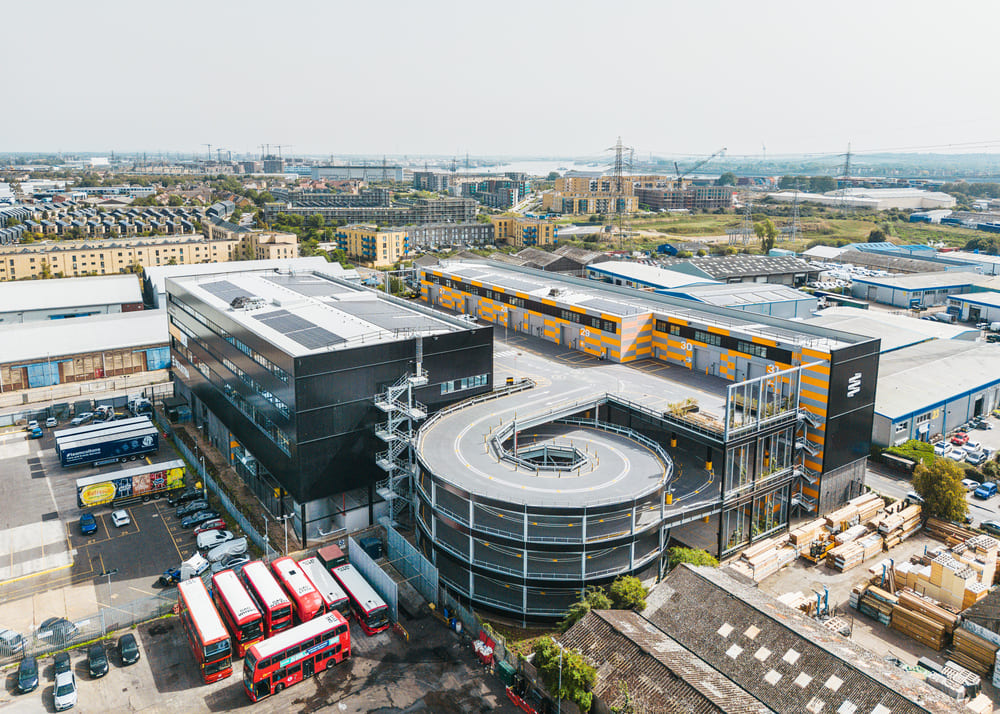
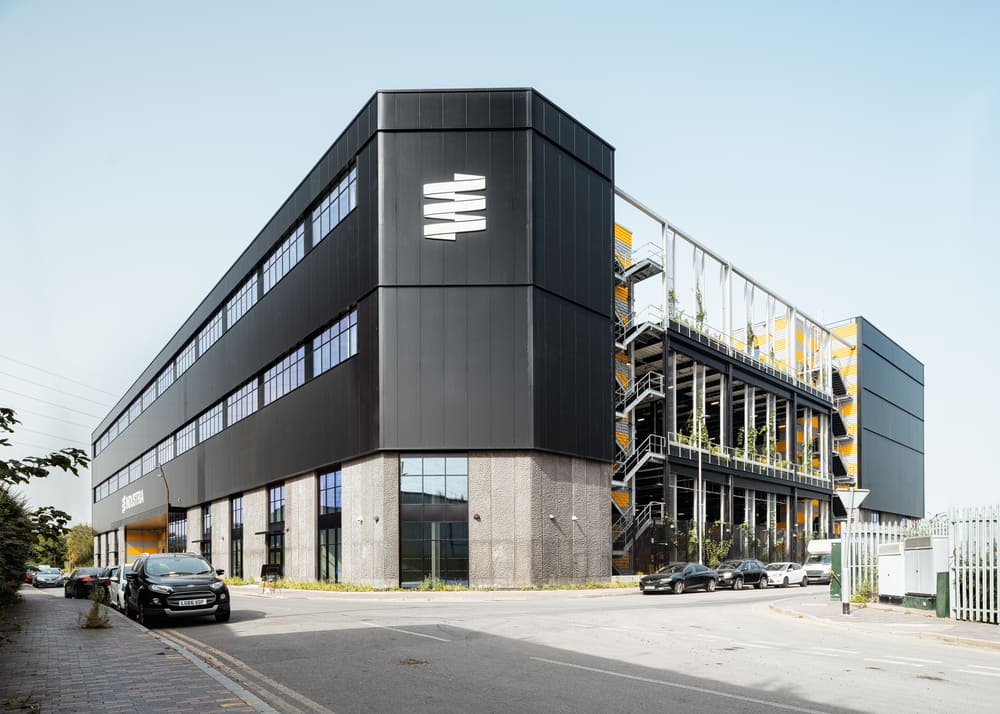
On a tight brownfield site in the River Road Employment Area, Haworth Tompkins and Ashton Smith Associates, working with Be First, have created the UK’s first multi-storey light-industrial scheme of its kind: a stacked, high-density alternative to the traditional single-storey shed.
All images © Fred Howarth

A Case Study in High-Density Industrial Innovation
Instead of spreading out, Industria builds up. The scheme delivers 11,500 m2 of flexible industrial space across 45 Small and Medium-sized Enterprise (SME) and flatted factory units, arranged over ground, first and second floors.
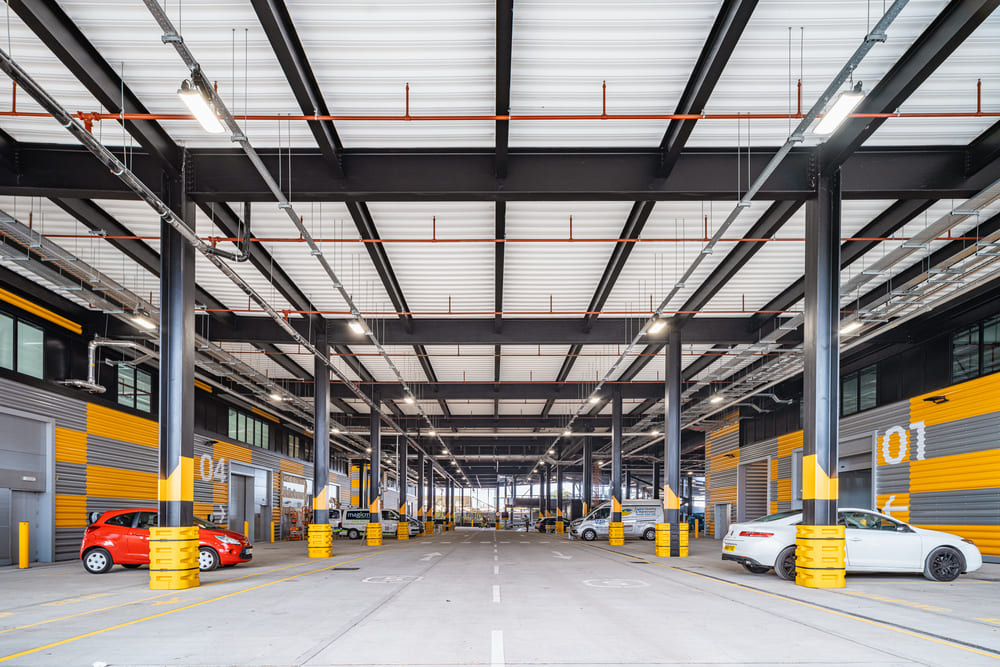
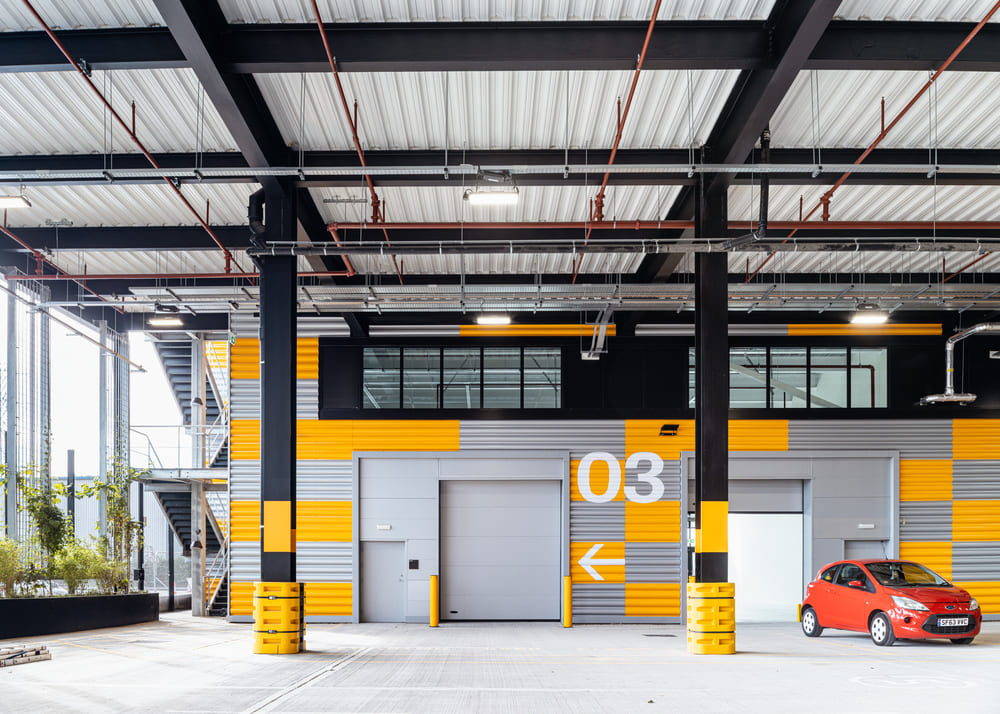
Crucially, a helical van ramp gives direct vehicle access to the upper levels, allowing businesses to load and service from their own front doors – even when those doors sit two storeys above ground. A central service yard is held between two deep wings of accommodation, with generous spans, clear volumes and an efficient steel frame providing a robust, loose-fit chassis designed to work hard for more than a century.
Galvanized Steel as the Structural Backbone of High-Density Industrial Architecture
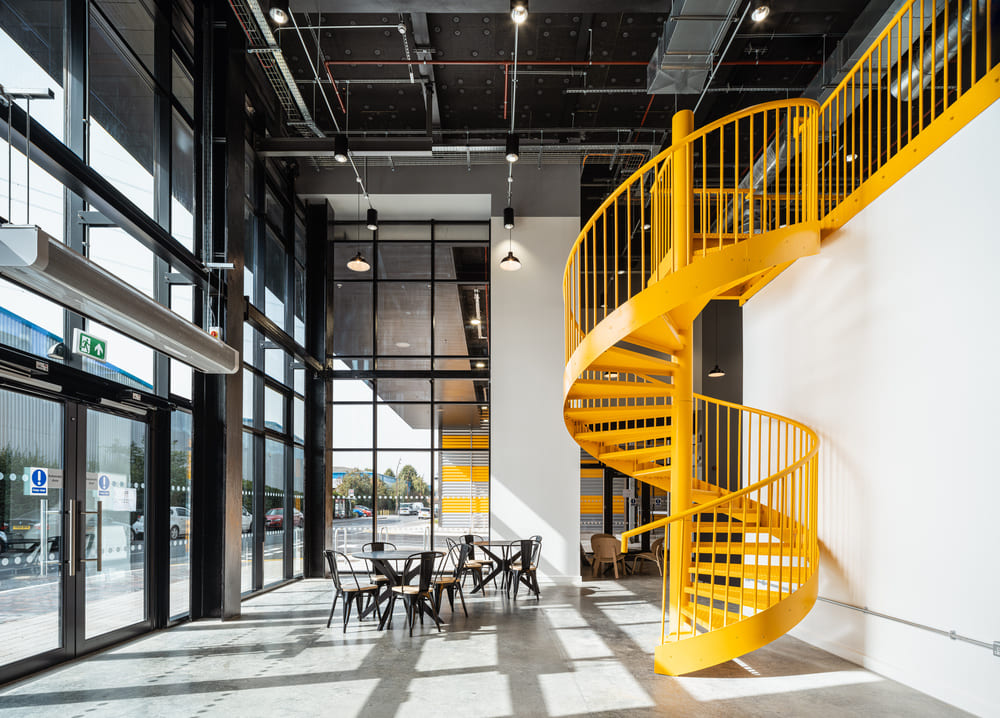
At Industria, galvanized steel played a central role in both the structural and architectural expression of the building. It is the visible, expressive skeleton of the building. The exposed ramp structure, columns and beams, external staircases, handrails, green wall trellises and support frames all use hot dip galvanizing as both protection and architectural finish.
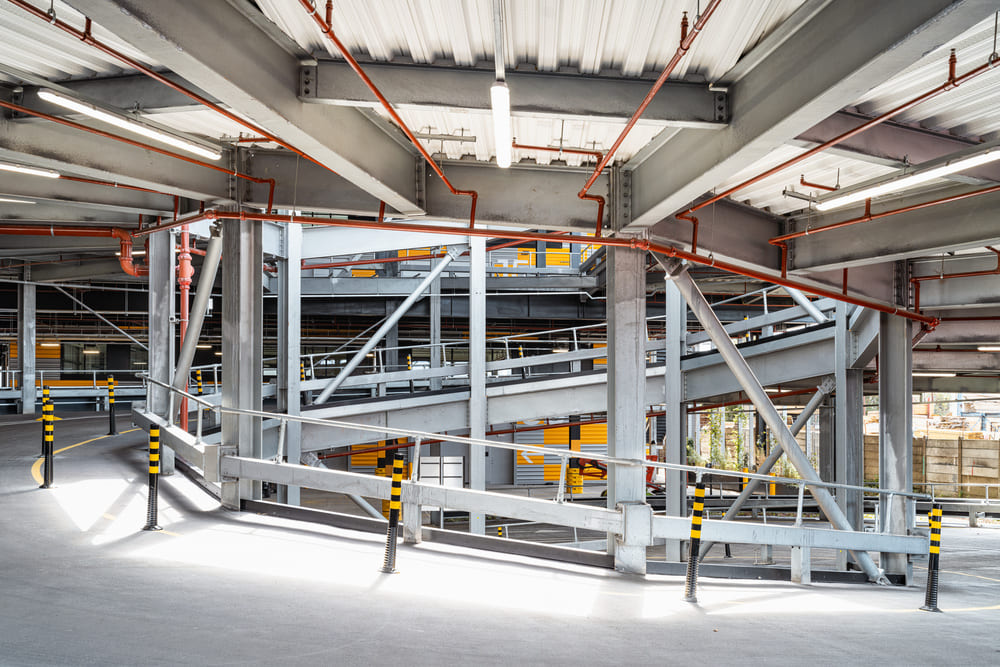

The result is an instantly legible identity: tough, functional and precise, but also carefully curated.
The decision to galvanize was driven by performance as much as appearance. In an exposed, heavily used industrial environment, long-term corrosion protection and minimal maintenance are not optional extras, they are fundamental to keeping whole-life costs under control and to ensuring that the building can adapt rather than be replaced.
Galvanized steel delivers a durable, continuous coating that can withstand knocks, weather and pollutants, making it ideal for ramps, stairs and edge details that will be touched, scraped and driven past every day.
At the same time, the characteristic galvanized surface – lively, variegated, unmistakably “industrial” – reinforces the architectural ambition rather than detracting from it.
Sustainability and future flexibility sit at the core of the design. Industria’s stacked model maximises the use of scarce inner-city land, combining a lean steel structure, efficient floorplates and a highly insulated envelope to create a long-life “chassis” that can be reconfigured, adapted or partially disassembled over time.
The building achieves BREEAM Excellent and EPC A ratings, incorporates around 2,000 m2 of photovoltaic panels, and provides EV charging points in each unit’s loading area. Here, galvanized steel supports this strategy by extending service life, reducing the need for replacement components and supporting circularity through the inherent reusability and recyclability of galvanized steel.
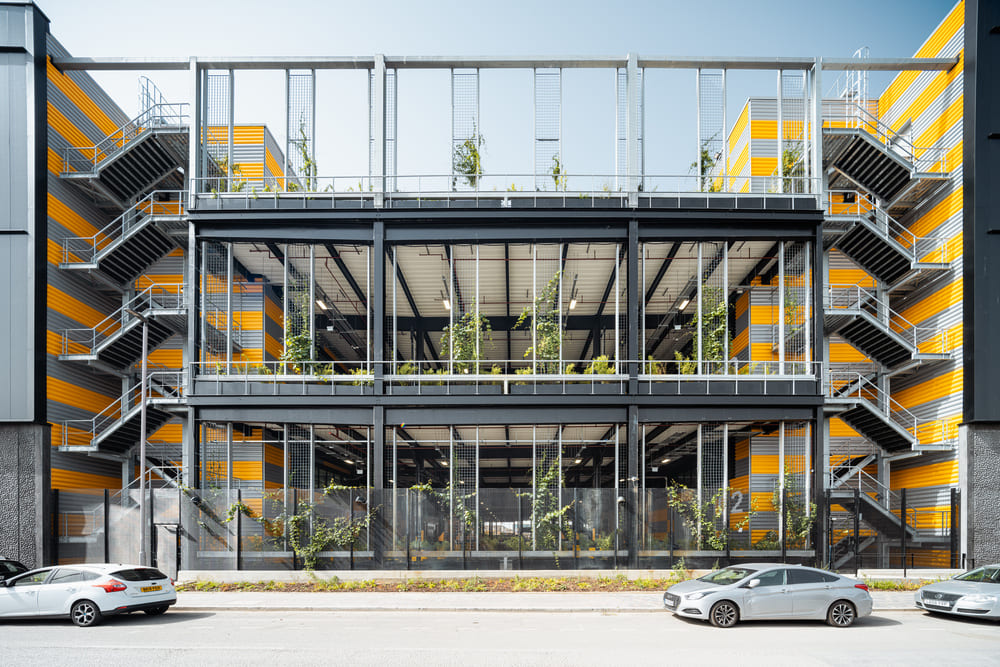
Architecturally, the scheme raises expectations for speculative industrial buildings. Full-height ‘shopfront’ glazing animates the ground floor, while a public café and business hub open the project to the street. Above, a rooftop breakout space offers tenants a place to meet, eat and socialise away from the working yard, a social layer rarely associated with industrial estates. Intelligent landscaping works hard on a dense site, using full-height green walls supported on galvanized frames, biodiverse margin habitats, native hedgerows and rain and shade gardens to deliver SUDS, visual relief and ecological value.
Industria points to a new typology for urban industry in the UK: multi-level, high-density, socially and environmentally ambitious and underpinned by galvanized steel as both protective technology and architectural expression.
Project Information
Architect: Haworth Tompkins
© Fred Howarth
- UK & Ireland
- Clevedon, England
- UK & Ireland
- UK & Ireland
- Bochum, Germany
- Putbus, Germany
- Inverkip, Scotland
- Rhineland, Germany
- Belfast, Northern Ireland
- London