
Tough Shell,
Gentle Heart
In Essen’s Stoppenberg district, a building of quiet confidence and refined resilience now stands as a potential benchmark for future-facing architecture. The new RWE Historic Corporate Archive is not only a home for sensitive archival material, it’s a compelling statement on how design, sustainability, and durability can converge with grace. Designed by ELEMENTAR, Studio for Architecture and Transformation, and realised by GfV Gesellschaft für Vermögensverwaltung mbH, the project has earned top honours in architectural competitions in Germany.
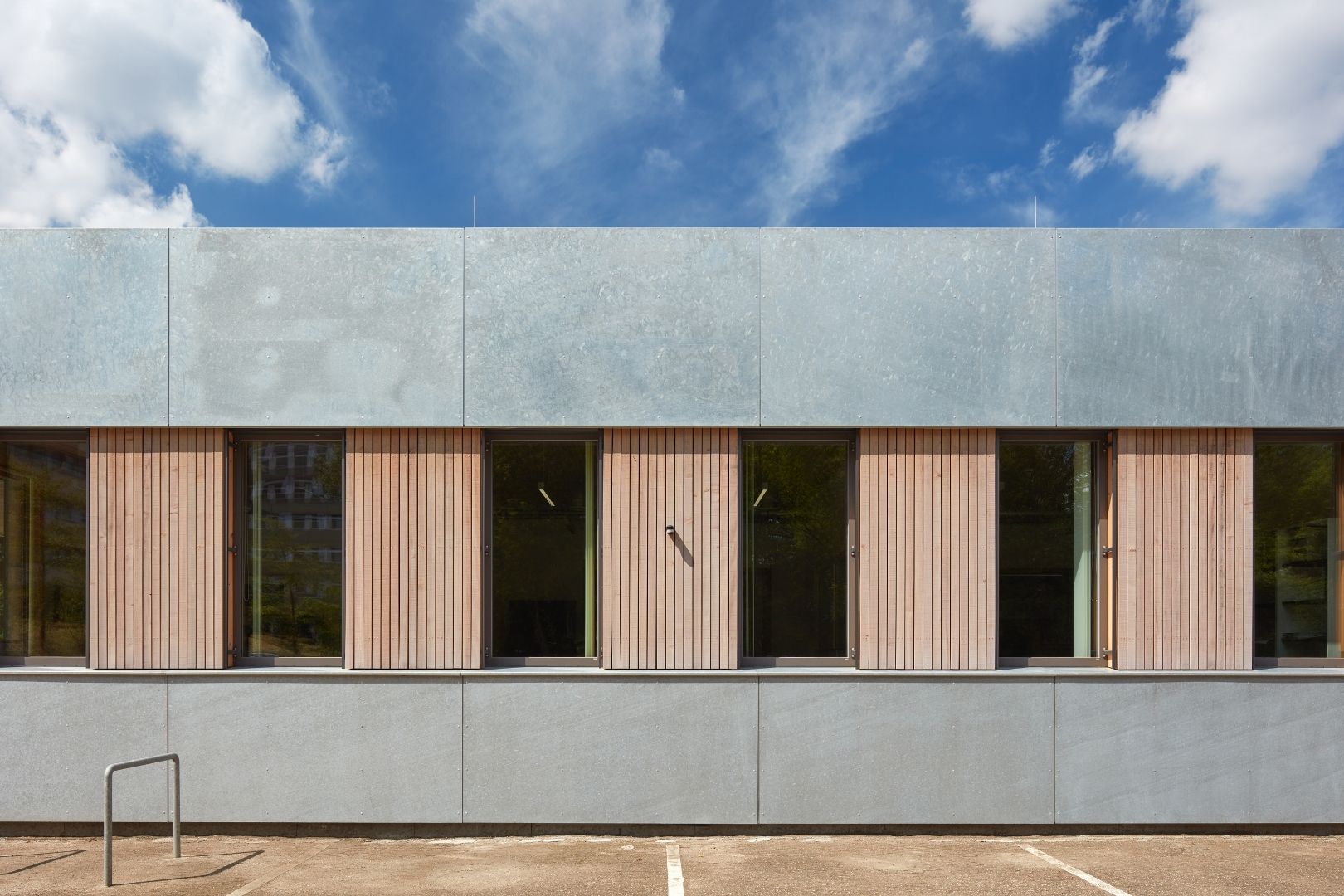
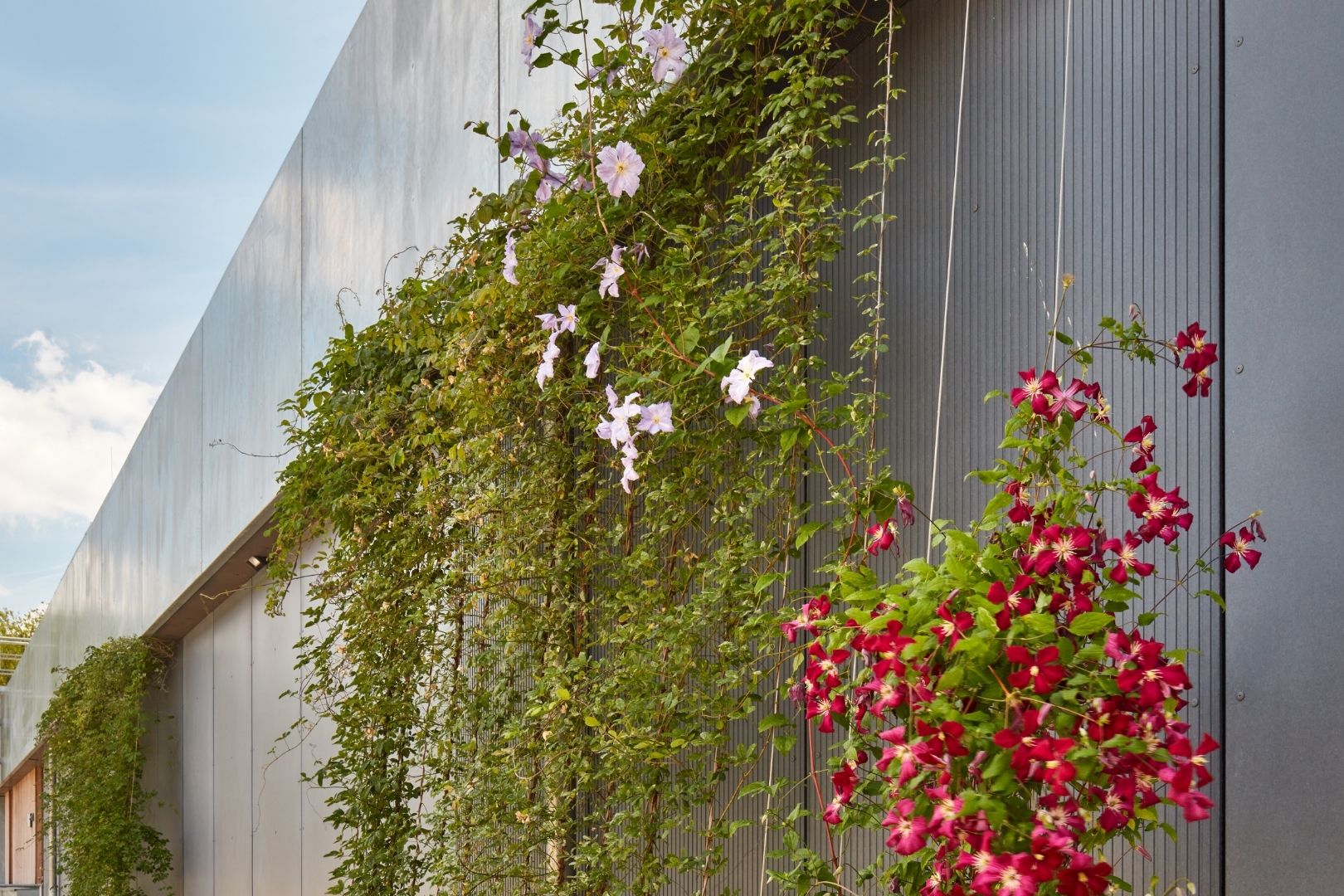
At first glance, the building presents a composed, monolithic presence, severe in silhouette and calm in character. But its minimal exterior conceals a layered intelligence, a harmonious system where material honesty, environmental performance and architectural clarity are carefully interwoven. True to the project’s guiding ethos, “a tough shell, a gentle heart”, the building achieves an elegant duality. It is highly controlled on the inside, radically open in its commitment to circularity, and strikingly refined in its use of material.
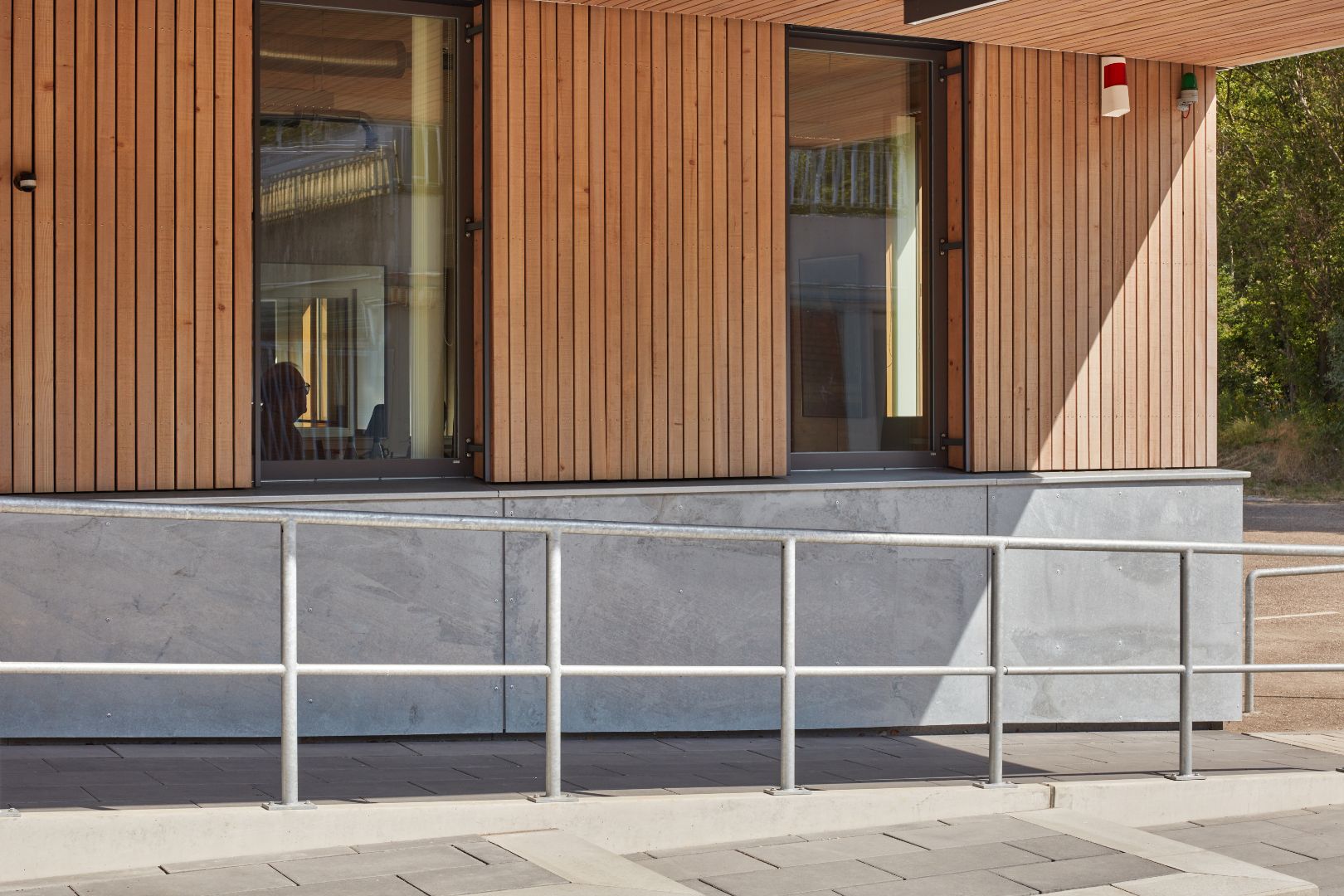
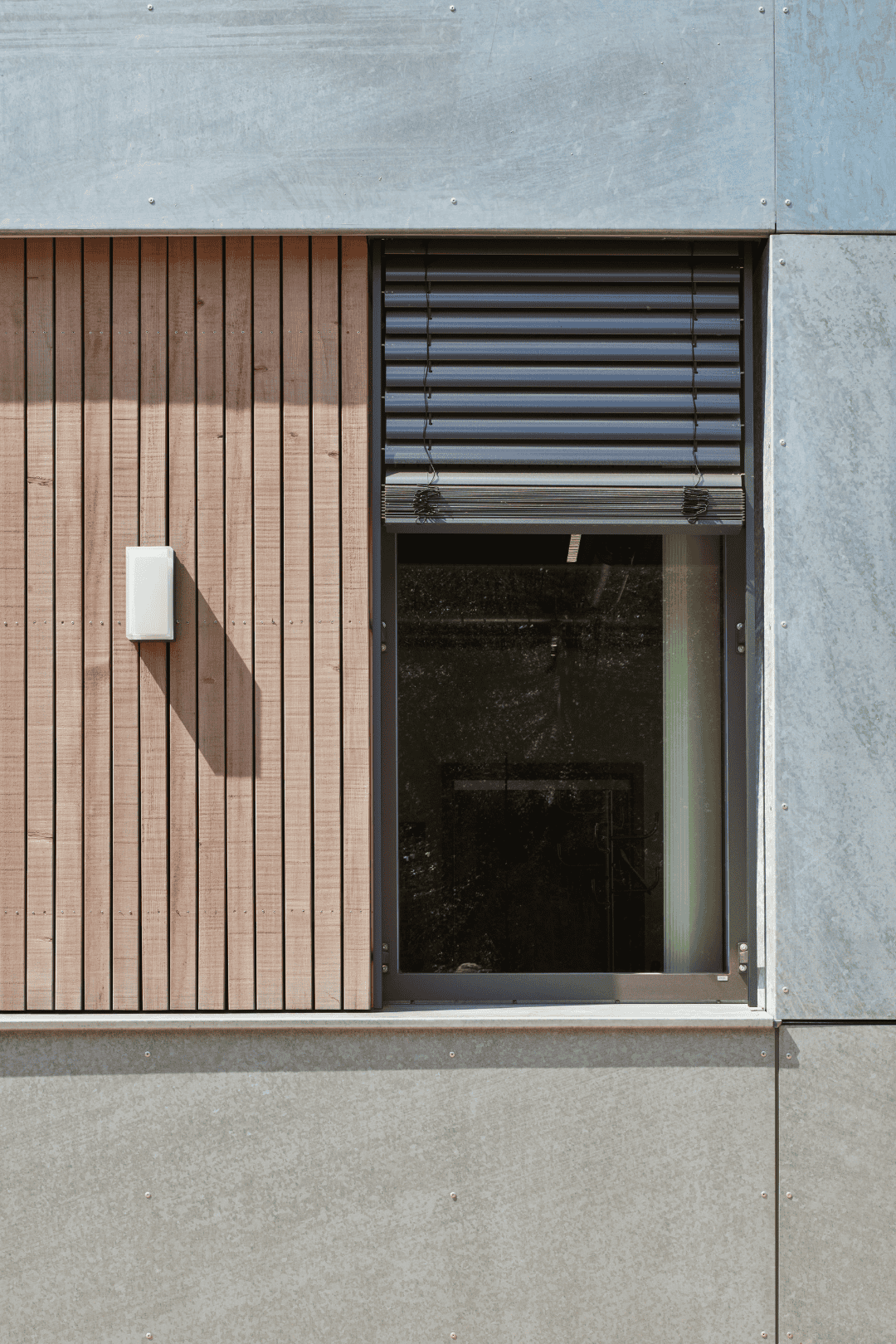
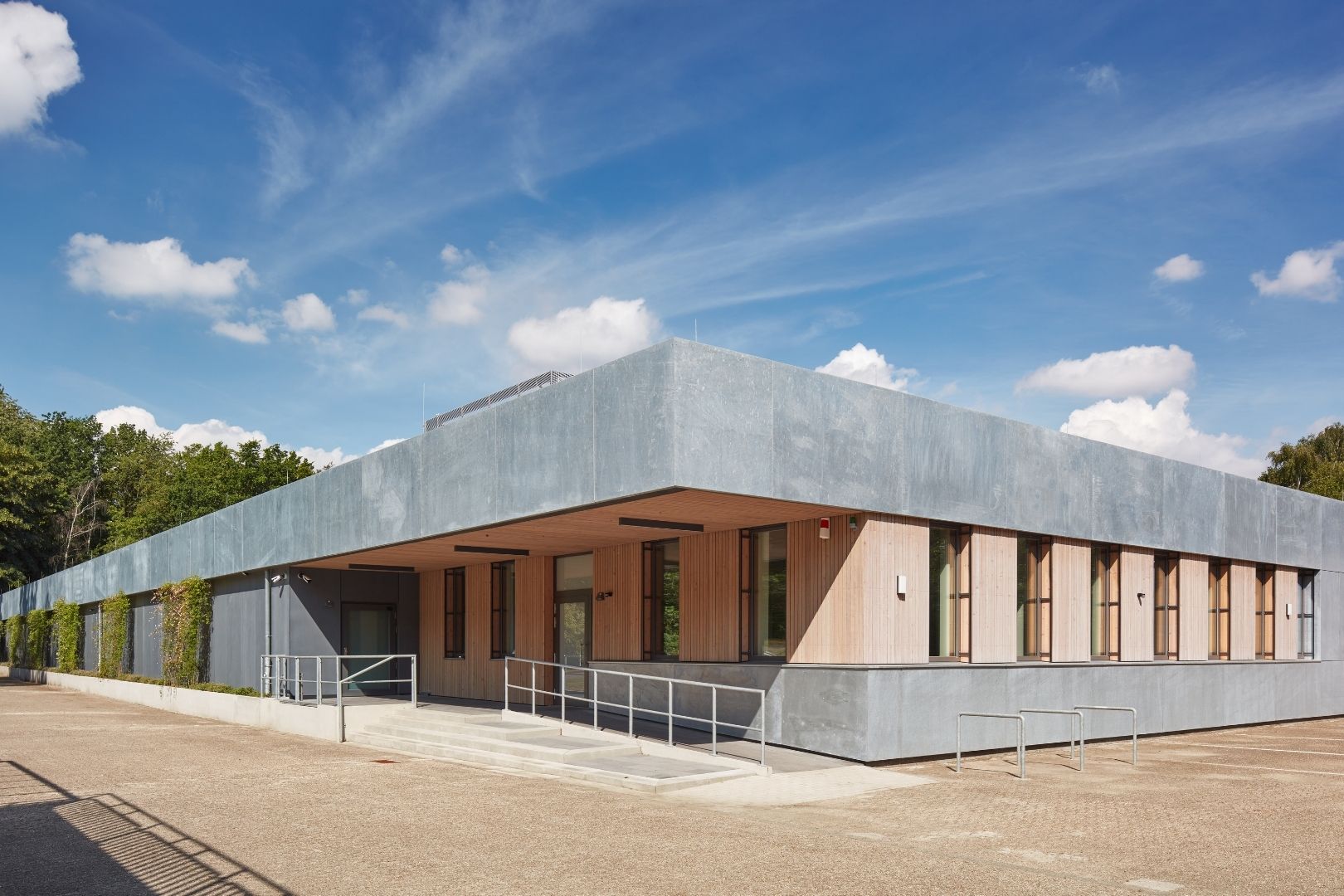
The “tough shell” takes form through a robust outer envelope of hot dip galvanized steel and fibre cement panels, chosen for their resilience and near-zero maintenance requirements. But this is more than a pragmatic cladding solution. It is a bold, architectural statement. Large-format galvanized steel plates wrap the volume with a serene industriality, lending both rhythm and restraint to the building’s composition.

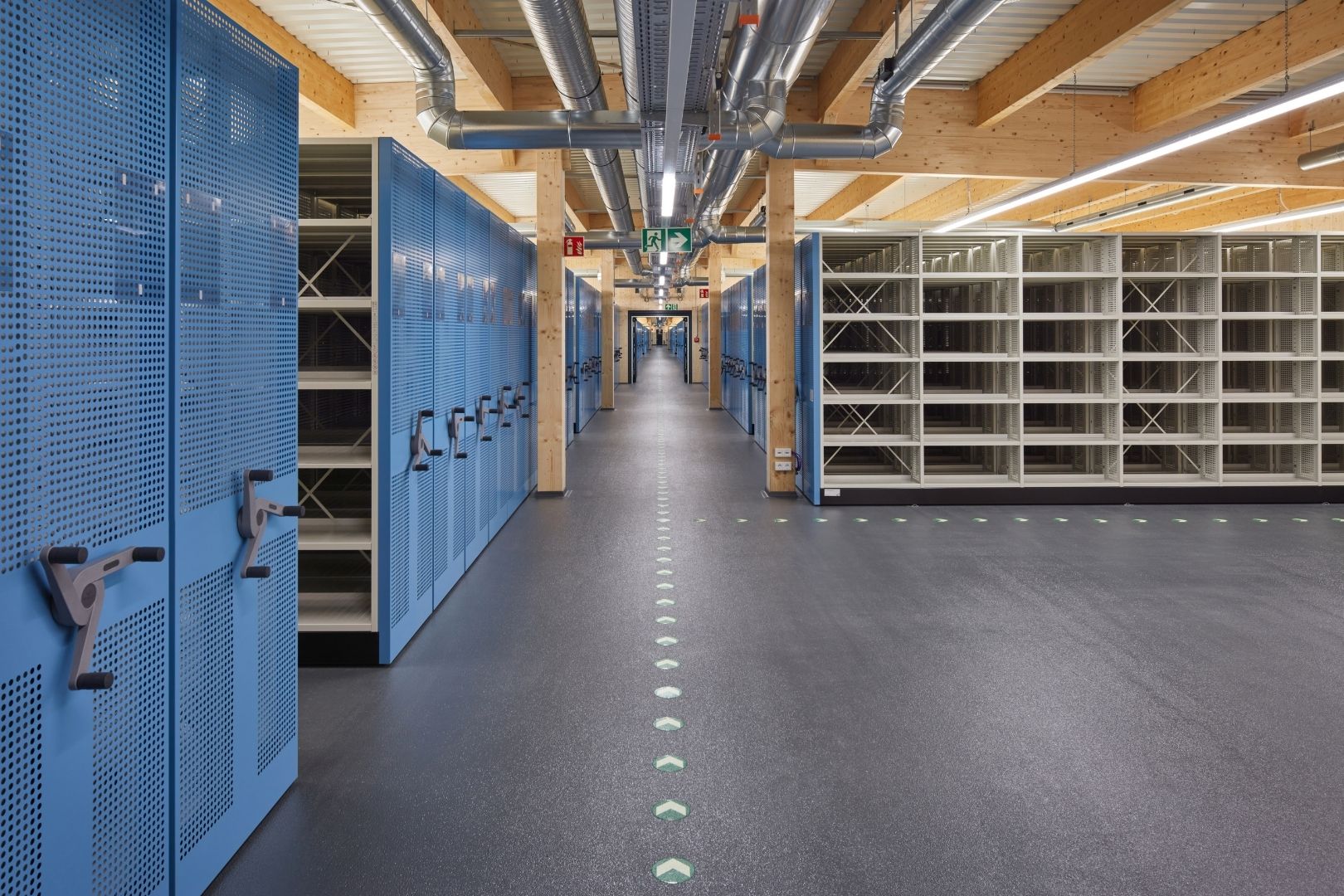
Inside, the architecture takes a quieter turn, yet remains just as considered. The “gentle heart” of the building lies in its archival interior, where environmental control is achieved without active systems. Untreated timber, free of adhesives, creates a stable microclimate that passively regulates temperature and humidity. In these spaces, there is no daylight, no plumbing, and no rooftop penetrations. Every decision supports the singular goal of preservation.
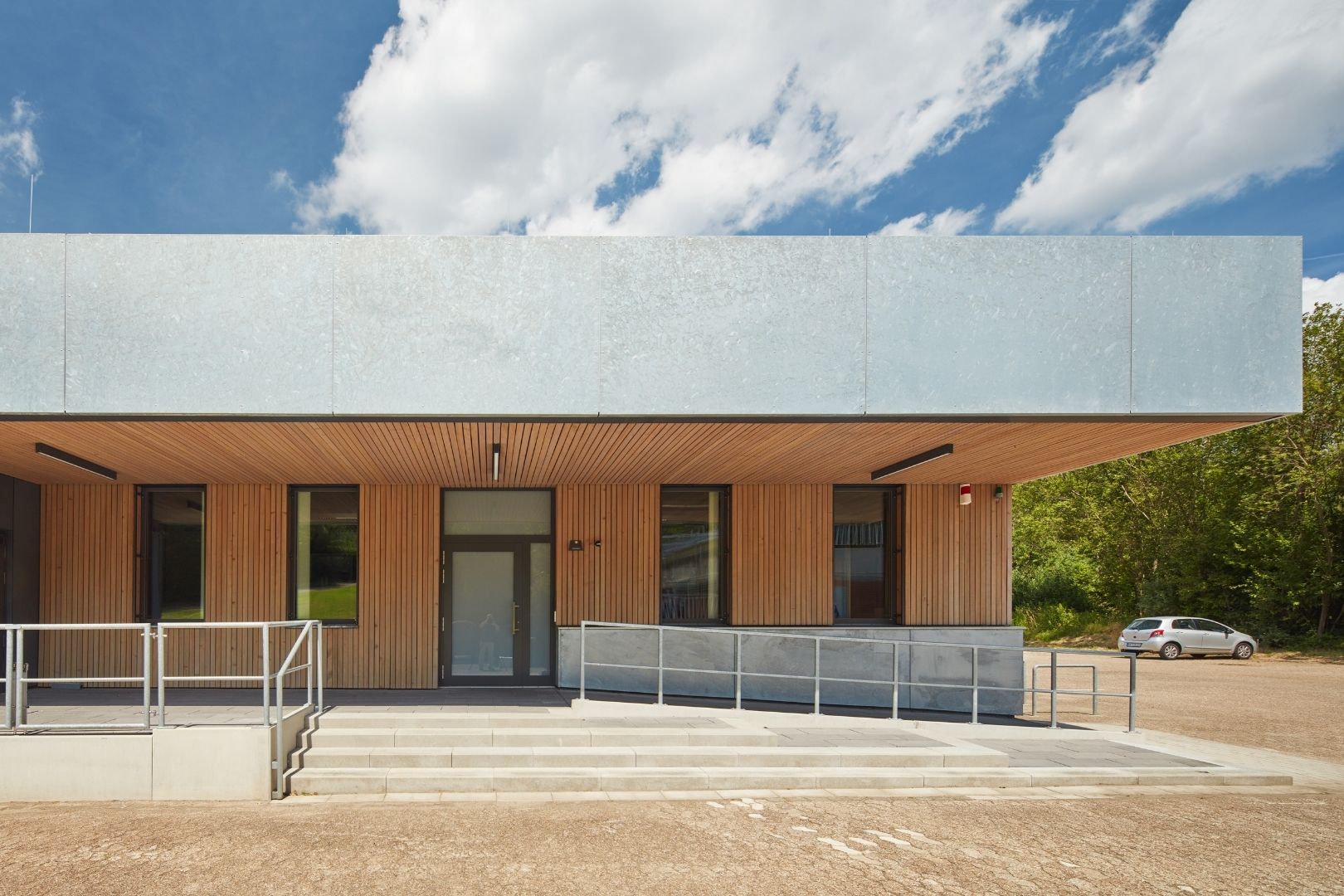
What sets the building apart is its carefully orchestrated contrast. The cool, metallic exterior gives way to a warm, tactile interior. This is not merely aesthetic, it is strategic. At the entrance, the timber lining breaks through to the outside, offering a moment of material revelation. It is a subtle invitation and a reminder that this is a building guided by principle and clarity.
Simplicity here is not a concession. It is the architecture.
An Archive for the Future
The RWE Historic Corporate Archive stands as a powerful example of architecture that is tough, exacting and forward-looking. It proves that hot dip galvanized steel is more than just a protective measure. It is an architectural ally, a circular solution, and a material of integrity.
In a time when buildings must do more than shelter, when they must conserve, endure and regenerate, this archive shows how thoughtful material strategy and purposeful design can come together to create something quietly extraordinary. Built to last. Designed to inspire.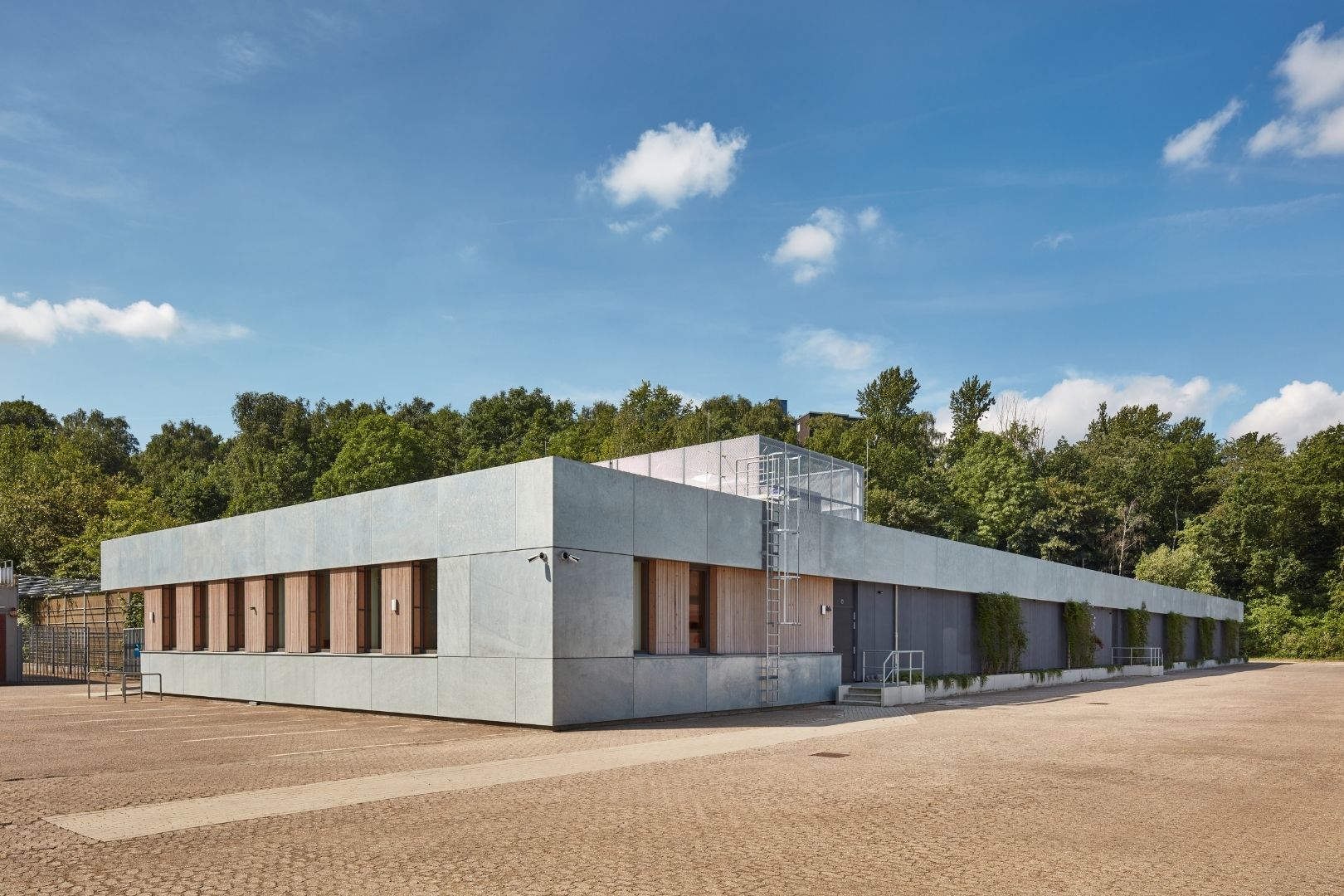
Project Information
Architect: Büro ELEMENTAR – Studio für Architektur und Transformation
Client: GfV Gesellschaft für Vermögensverwaltung mbH
© Sigurd Steinprinz
- Clevedon, England
- London
- Germany
- Suffolk
- Rosenheim
- London
- Berlin, Germany
- London